

Solución integral de Grand para líneas de producción de bolsas de goteo intravenoso flexibles.
¿Cómo optimizan las máquinas automáticas de llenado de cosméticos el envasado de productos para el cuidado de la piel?
Máquinas de blíster: ¿Las heroínas anónimas del envasado primario farmacéutico?
Introducción
El recorrido de un fármaco desde el laboratorio hasta el paciente es complejo. Investigaciones recientes, como un estudio de 2023 en Comunicaciones de la naturalezarevela cómo incluso interacciones a nanoescala[1]Factores como la "corona proteica" que se forma en las nanopartículas lipídicas influyen de manera crucial en cómo se dirigen y administran las terapias dentro del cuerpo. Esto subraya una verdad fundamental: el entorno inmediato de un fármaco es primordial. Esto nos lleva a una etapa crucial, a menudo pasada por alto: Embalaje primarioEs la primera línea de defensa, el material que entra en contacto directo con el medicamento. Entonces, ¿puede un caballo de batalla común, el máquina de blíster, manejar verdaderamente esta responsabilidad crítica en envase primario farmacéutico ¿Solicitudes?



Vayamos al grano: Absolutamente.
¿Qué es exactamente el embalaje primario?
Embalaje primario es el material que primero envuelve el producto y lo contiene. Piense en el blíster que contiene una tableta o en un vial que contiene un líquido. En el envase primario farmacéutico En el mundo, su papel es innegociable. Debe:
- Proteja el medicamento de la contaminación (humedad, oxígeno, luz, microbios).
- Mantener la estabilidad y la eficacia del medicamento.
- Garantizar la seguridad del paciente.
- Proporcione información precisa sobre la dosificación.
Esto no es solo un envase; es una parte integral del propio producto farmacéutico.
Presentamos la máquina de blísteres: una potencia del embalaje.
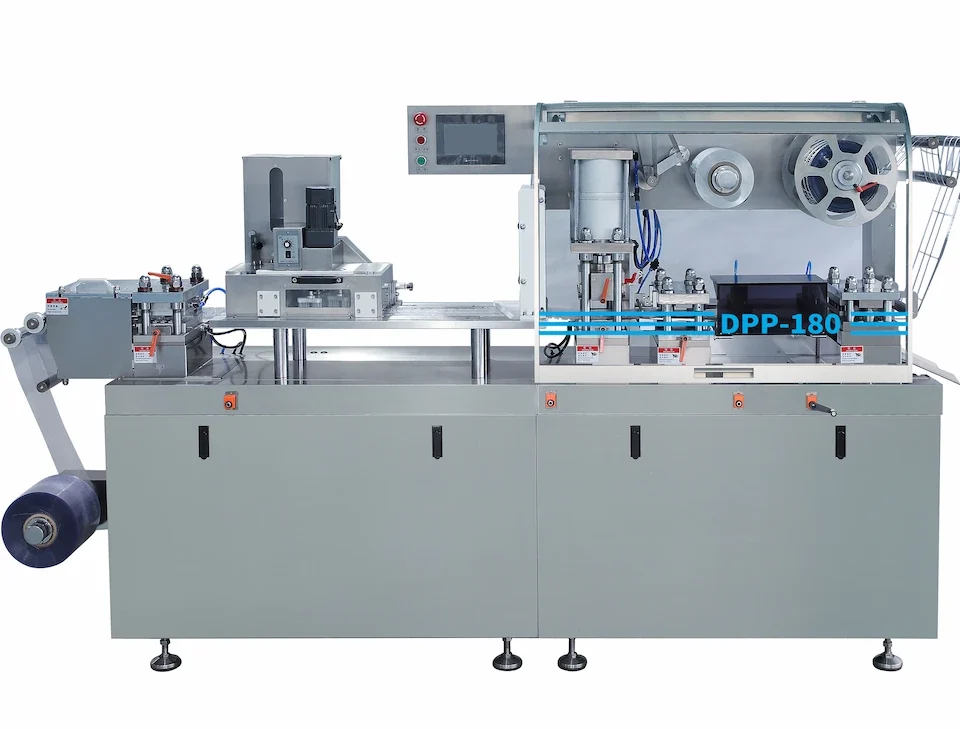
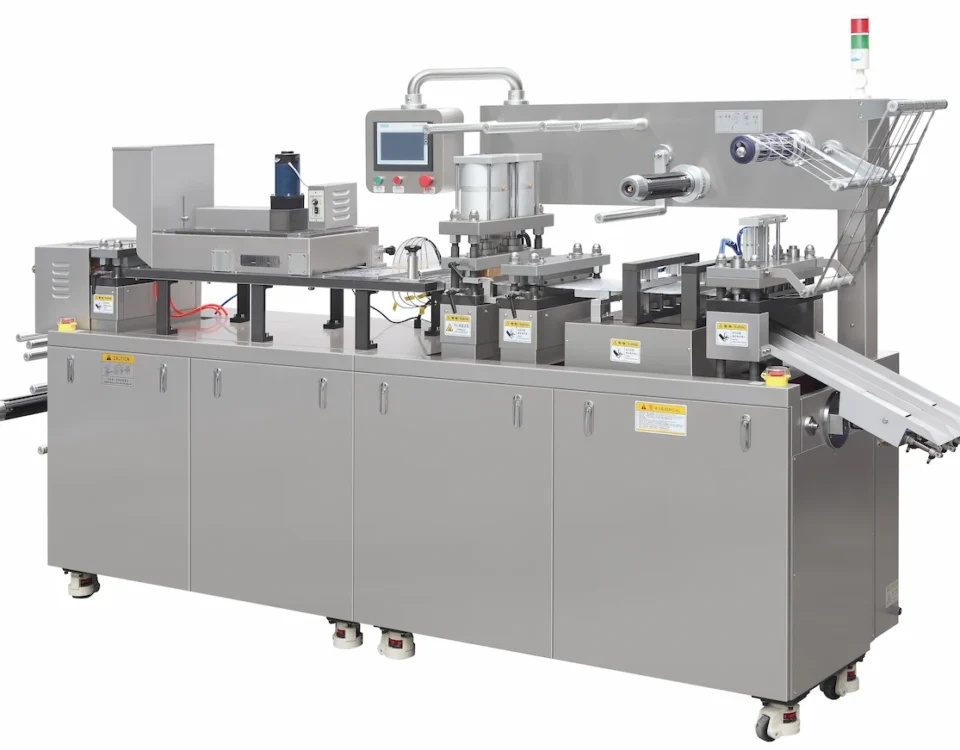
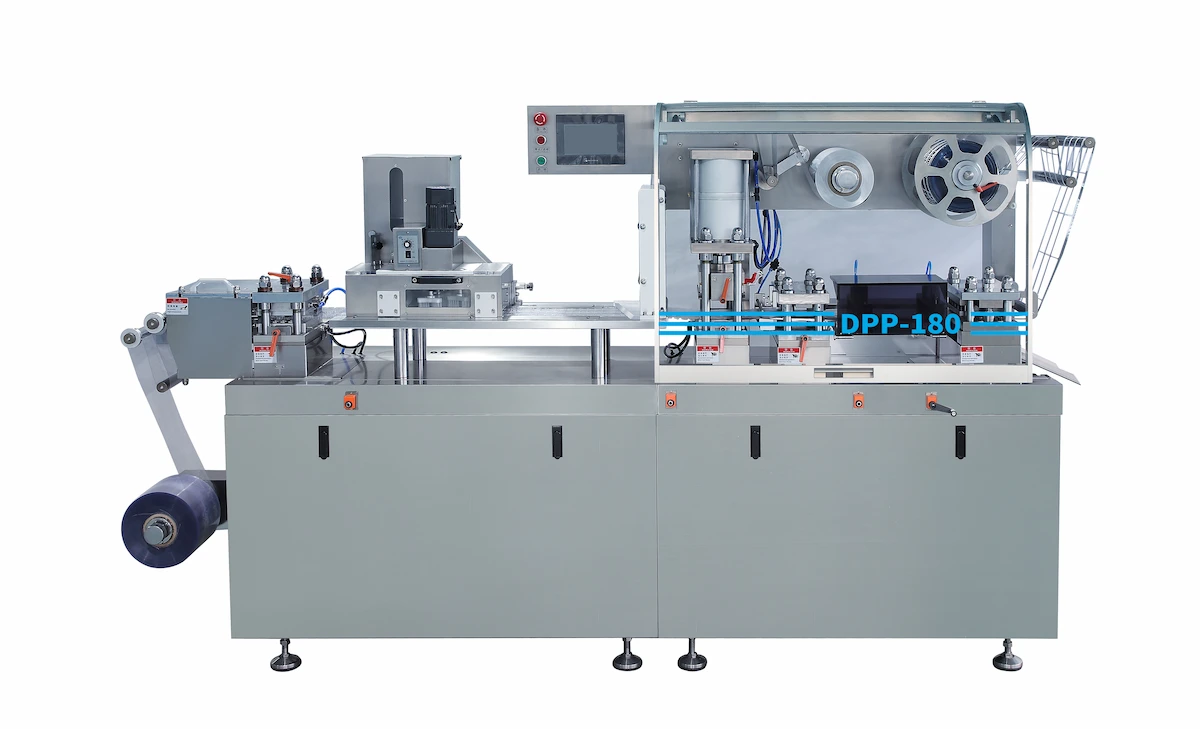
A máquina de blíster, o Máquina de envasado en blísteres una piedra angular de las líneas de envasado farmacéutico. Estas máquinas forman expertamente cavidades (blísteres) a partir de una malla de material moldeable, generalmente plástico. El producto farmacéutico (comprimidos, cápsulas) se coloca luego en estas cavidades. Otra capa, a menudo Plástico de aluminio Luego, se sella sobre las cavidades una lámina de aluminio (como la de las tapas). Toda esta operación es un proceso sofisticado. Máquina de llenado y sellado proceso, creando dosis individuales y protegidas.
Por qué las máquinas de blíster son excelentes para el envasado primario.
Entonces, ¿qué hace que un máquina de blíster tan eficaz para Embalaje primario?
- Protección superior: Las cavidades selladas individualmente, a menudo hechas de materiales como PVC, PVDC o Plástico de aluminio Estas combinaciones ofrecen excelentes barreras contra los factores ambientales. Esto protege los medicamentos sensibles de la degradación.
- Integridad del producto y evidencia de manipulación: Cada unidad de blíster está sellada. Cualquier manipulación es inmediatamente obvia, lo que mejora la seguridad del paciente. Esta integridad es un sello distintivo de buena calidad. envase primario farmacéutico prácticas.
- Precisión en dosis unitarias: Los blísteres proporcionan dosis unitarias predosificadas. Esto ayuda a los pacientes a seguir los tratamientos prescritos y reduce el riesgo de errores de dosificación, lo que supone una gran ventaja para el cumplimiento terapéutico.
- Versatilidad: Máquinas de envasado en blíster Pueden procesar una amplia variedad de formas farmacéuticas sólidas, desde pequeñas pastillas hasta cápsulas grandes, lo que las hace increíblemente versátiles.

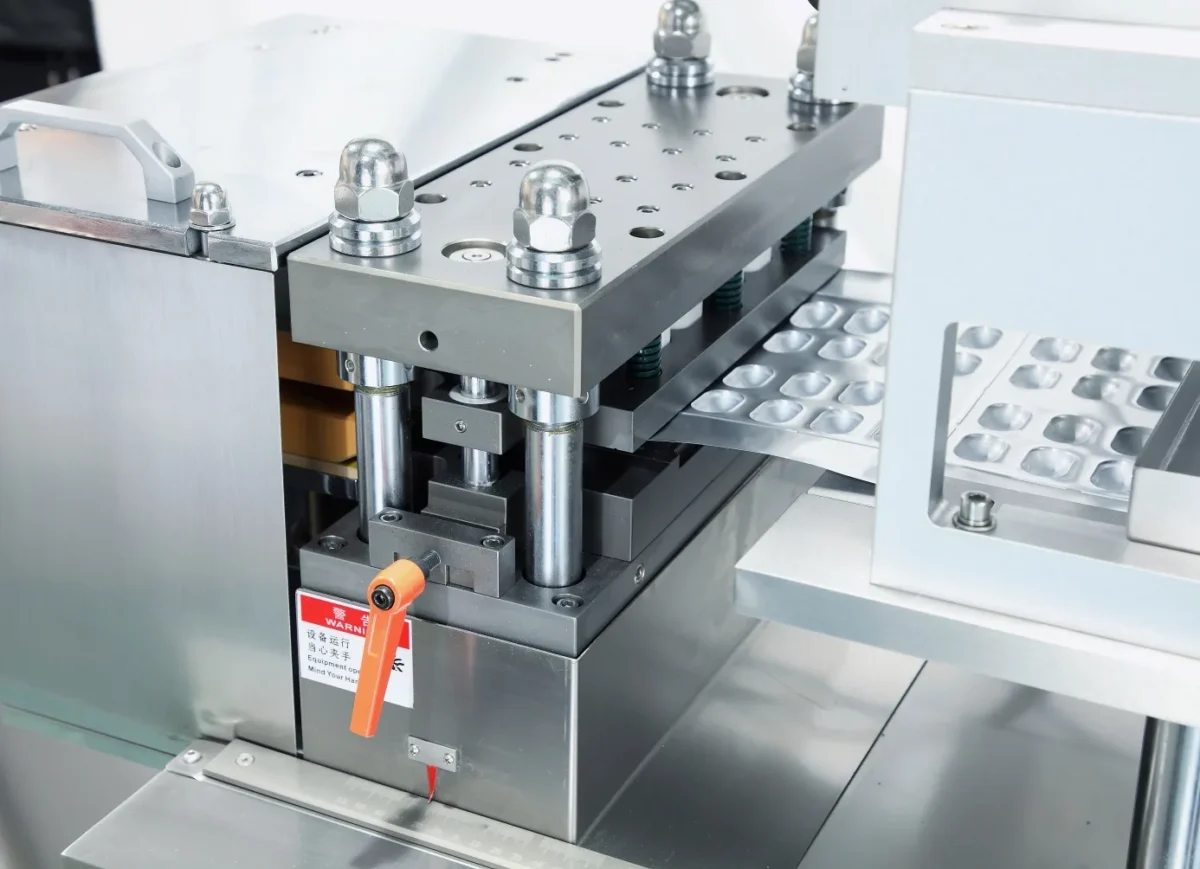
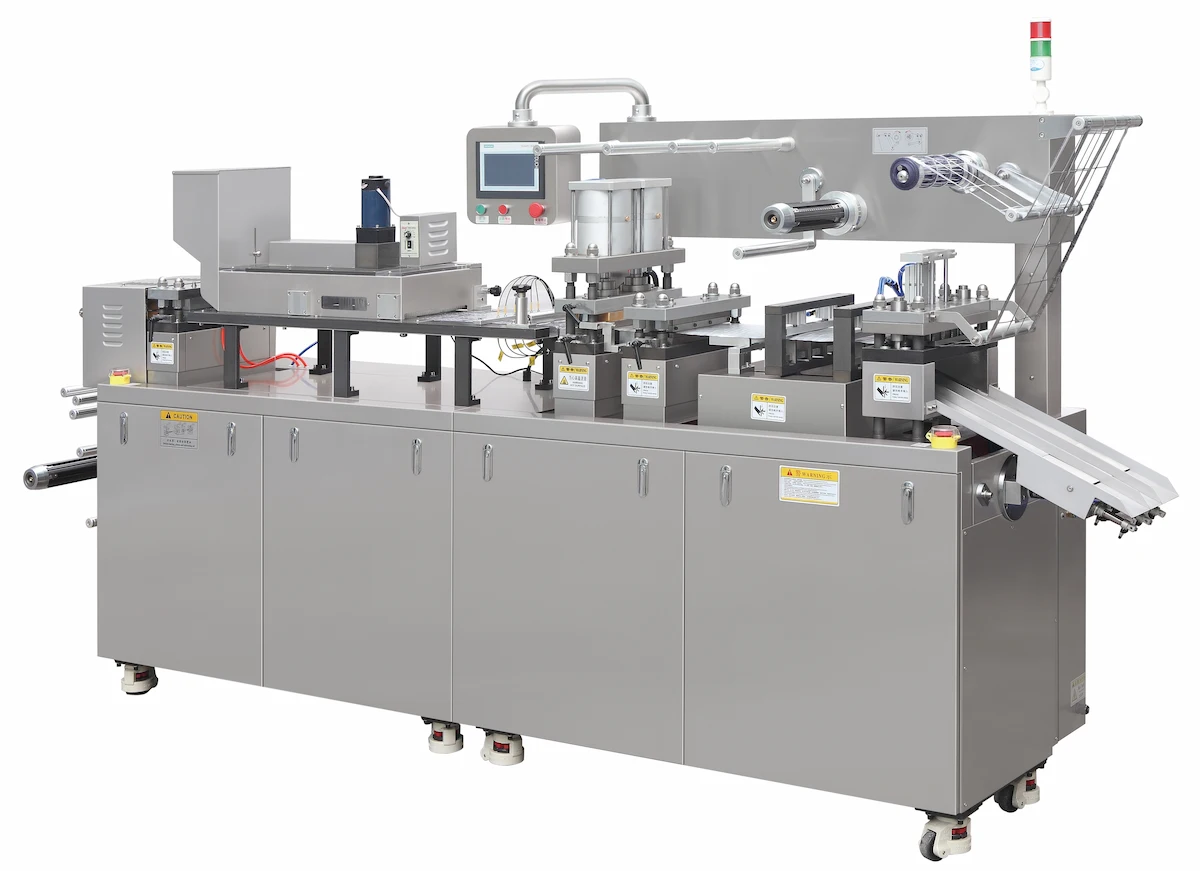
Máquina de llenado de blísteres Grand Sample
Consideraciones clave para un embalaje blíster de primera calidad
Si bien el envasado en blíster es un fuerte candidato, lograr un resultado óptimo Embalaje primario requiere atención al detalle:
- Elección de materiales: Seleccionar las películas formadoras adecuadas (como PVC, PET, PP) y los materiales de tapado (a menudo Plástico de aluminio (laminados) es crucial para las propiedades de barrera requeridas y la compatibilidad con los medicamentos.
- Calidad de la máquina: La precisión de la máquina de blíster La clave reside en sí misma. El conformado uniforme, el llenado preciso y el sellado robusto son imprescindibles. Un producto fiable. Máquina de llenado y sellado Esta función garantiza la integridad del paquete.
- Validación y cumplimiento: Al igual que todos los procesos farmacéuticos, las operaciones de envasado en blíster deben validarse exhaustivamente y cumplir con las Buenas Prácticas de Fabricación (BPF).

Posiciones clave de la máquina de llenado de blísteres
Panorama general: Calidad de entrada, calidad de salida
Eficaz Embalaje primario no empieza en el máquina de blíster. Comienza con un producto farmacéutico de alta calidad. Para dosis sólidas, esto significa tabletas bien hechas. Aquí es donde entra en juego maquinaria avanzada como Grandes prensas de tabletas desempeñan un papel vital. Las grandes máquinas son reconocidas por su alta eficiencia y precisión, ofreciendo soluciones personalizables para satisfacer diversas necesidades de fabricación.
Al garantizar que los comprimidos se formen de manera uniforme con el peso correcto, dureza[2]y dimensiones, estas prensas proporcionan la entrada ideal para la etapa posterior de envasado en blíster. Después de todo, incluso las mejores Máquina de envasado en blíster No se puede arreglar una tableta mal hecha.
El veredicto: Las máquinas de blíster son campeonas en el envasado primario.
Entonces, ¿puede un máquina de blíster manejar las demandas de Embalaje primarioLa respuesta es un rotundo sí. No solo son capaces; son esenciales. Desde proteger formulaciones delicadas con materiales como Plástico de aluminio para garantizar el cumplimiento del paciente mediante el envasado en dosis unitarias, el Máquina de envasado en blíster es un crítico Máquina de llenado y sellado que mantiene la integridad y la eficacia de innumerables productos farmacéuticos. Cuando se combina con procesos previos de calidad, como la fabricación de tabletas en prensas de tabletas Grand de precisión, el envasado en blíster se presenta como una solución robusta en el mundo de envase primario farmacéutico.
Referencias
[1].Liu, K., Nilsson, R., Lázaro-Ibáñez, E. y otros. El análisis multiómico de las coronas de nanopartículas lipídicas naturalmente eficaces revela que la lipoproteína de alta densidad es necesaria para su función. Comunidad Nacional 14, 4007 (2023). https://doi.org/10.1038/s41467-023-39768-9
[2].La dureza de los comprimidos: por qué es importante en la fabricación farmacéutica..



Comentarios de 2
¡Excelente resumen! Este artículo destaca, con razón, la importancia de las máquinas blíster como esenciales para el envasado primario de productos farmacéuticos. El énfasis en la protección, la integridad y la precisión de la dosis unitaria evidencia su relevancia. También es positivo observar la conexión con la calidad en etapas anteriores del proceso, como la obtención de comprimidos bien formados mediante prensas fiables, para lograr un envasado verdaderamente eficaz.
Este artículo defiende con firmeza el papel del envasado en blíster en la industria farmacéutica. Explica claramente cómo las máquinas de blíster satisfacen las necesidades del envasado primario, desde la protección del medicamento con materiales como el papel de aluminio y plástico hasta la garantía de la seguridad del paciente y la precisión de la dosificación.