Пакеты типа «дой»: форматы, способы наполнения и планирование линии.
Quick answer: Choose a blister packaging machine by defining the product, finished pack, forming and lidding materials, and required output of acceptable packs—not by comparing headline speeds alone. Your request for quotation (RFQ) should identify every format, the equipment configuration, included tooling, inspection requirements, utilities, and acceptance criteria. Compare suppliers on the same scope and ask how output will be demonstrated with representative products and materials. Agree on a factory acceptance test (FAT) protocol before ordering. The FAT itself normally follows manufacture and precedes shipment. Catalogue specifications provide a starting point; the quotation and agreed tests should make the supply commitment explicit.
A low machine price is not necessarily a low project cost. Missing change parts, an unsuitable feeder, or an undefined acceptance test can make two apparently similar offers very different purchases.
This guide focuses on blister packaging equipment for tablets and hard capsules. It explains how to prepare an RFQ, compare the quoted scope, and define what successful delivery means. For broader introductory considerations, see our 10 советов по покупке первой блистерной упаковочной машины.
1. Blister Packaging Machine Specifications: Define the Finished Pack
Start with a concise user requirements specification (URS). It does not need to be lengthy, but it should describe the actual product and pack rather than simply request “a high-speed automatic machine.”
Use the same requirements when approaching each supplier. Otherwise, one quotation may cover a basic machine and one format, while another includes several tooling sets, product inspection, and downstream integration.
| RFQ input | What to provide | Why it matters |
|---|---|---|
| Продукт | Tablet or hard-capsule dimensions, tolerances, photographs, and representative samples | Supports assessment of feeding, cavity geometry, and product handling |
| Finished pack | Card dimensions, cavity layout, units per card, perforations, and coding requirements | Defines the saleable output unit and format parts |
| Forming and lidding materials | Supplier, grade, laminate construction, thickness, web width, and sealing layer | Establishes the materials that need compatibility assessment |
| Production requirement | Required good cards/hour, batch sizes, product mix, and operating schedule | Separates usable output from a short maximum-speed demonstration |
| Quality and inspection | Defects to detect, inspection location, rejection requirements, and quality checks | Defines what the quoted inspection system must demonstrate |
| Utilities and layout | Available electrical supply, compressed air, cooling arrangements, floor plan, and access constraints | Identifies installation requirements and site responsibilities |
| Changeovers | Required formats, change frequency, cleaning expectations, and permitted manual work | Helps compare flexibility and change-part scope |
| Documentation and support | Required drawings, manuals, training, spare-parts information, and acceptance records | Prevents important deliverables being left outside the quotation |
If material or format selection is unfinished, label it as an open decision. Ask for separate options instead of allowing an assumption to become an unspoken purchase commitment.
2. Separate Forming Technology, Sealing Design, and Automation
Three different questions often become mixed together during machine selection.
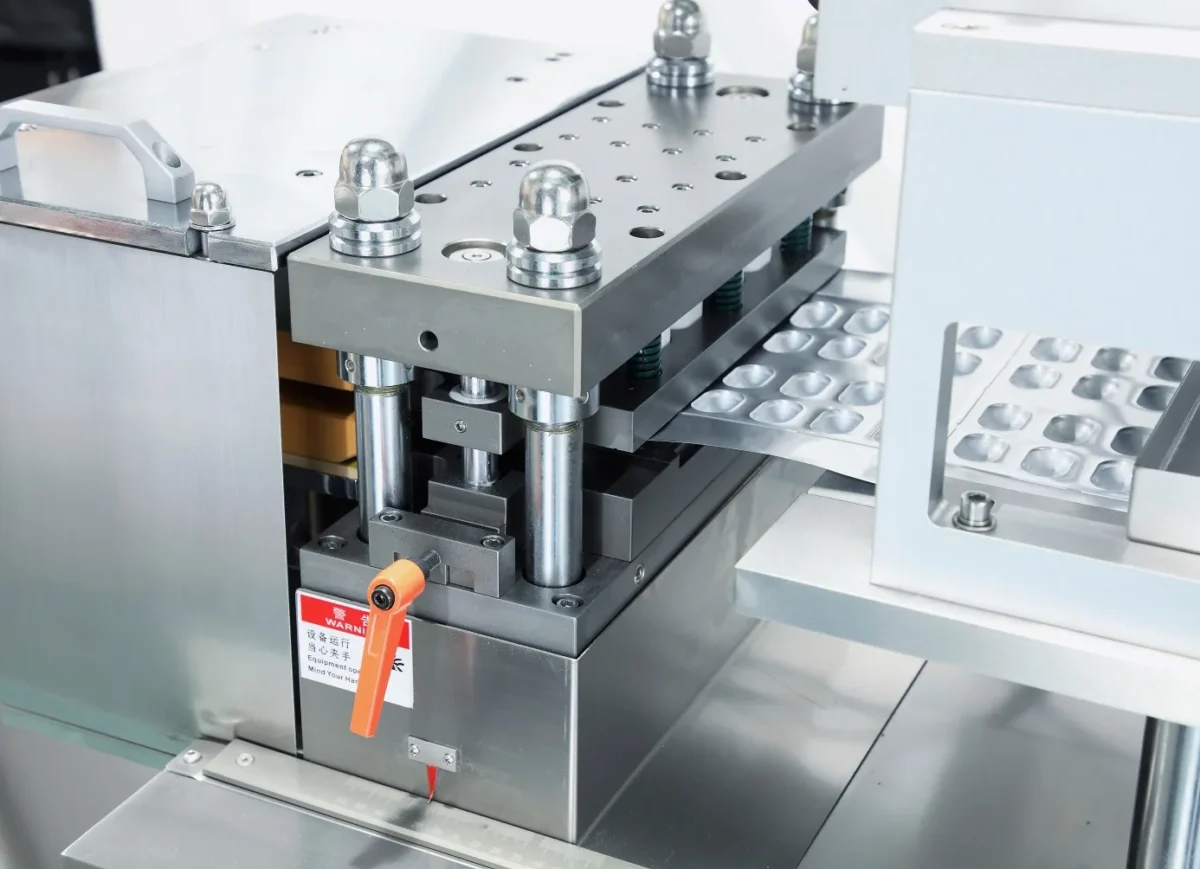
How are the cavities formed? Thermoforming shapes a heated plastic forming web. Cold forming mechanically shapes a suitable laminate into cavities. The choice depends on the specified packaging materials and product requirements; it should not be decided from the machine name alone.
How is the pack sealed? Cold forming does not mean cold sealing. An Alu-Alu blister can still use heat to seal the lidding foil to the formed web. Sepha's process description illustrates forming, heat sealing, and cutting as distinct stages. [1] Ask the supplier to confirm the forming web, lidding construction, sealing method, and tooling for your proposed pack.
Which operations are automated? “Automatic” should be translated into an actual scope: product feeding, web transport, inspection, rejection, coding, discharge, and any downstream transfer. It does not establish that every loading, replenishment, cleaning, or changeover task is automatic.
Likewise, platen or rotary sealing describes a machine's sealing arrangement, not a universal material-compatibility guarantee. Uhlmann presents sealing principle alongside format area and blister output in its equipment comparisons. [2] Those are separate selection variables, and your RFQ should keep them separate.
Do not assume that a machine offered for one material can switch to another by changing only the forming mould. Request written confirmation of the complete conversion scope.
3. Convert Advertised Speed into a Meaningful Output Requirement
“Cycles per minute,” “blisters per minute,” and “tablets per hour” are not interchangeable units. First ask which machine operation is being counted and how many finished blister cards each counted cycle produces.
For a defined reference cycle and format:
THEORETICAL OUTPUT
THEORETICAL PRODUCT OUTPUT
Illustrative calculation only—not a GRAND machine specification: If a hypothetical format produces four finished cards per cycle at 20 cycles/minute, the theoretical output is 80 cards/minute, or 4,800 cards/hour. At ten tablets per card, that equals 48,000 tablets/hour before losses or interruptions.
This calculation is valid only when the cycle-to-finished-card relationship is known. Different forming, sealing, and cutting arrangements may use different reference cycles. Ask the supplier to explain the relationship for the quoted machine and tooling.
For an acceptance test, the more useful measure is:
MEASURED ACCEPTABLE OUTPUT
Define the time boundary. Does it include replenishment, short stops, time spent handling rejects, and operator interventions? Is changeover measured separately? A steady-running rate and a whole-shift output requirement can both be useful, but they answer different questions.
4. Ask What the Control System Actually Does
In an appropriately configured system, a PLC coordinates operating sequences and logic, while servo drives control selected motion axes. Siemens explains how multi-axis control can synchronize motion in packaging applications. [3] That is an industry principle—not evidence that a particular GRAND machine includes Siemens hardware or any specific motion-control function.
Request the quoted controller and drive list, the axes under servo control, available recipe functions, backup arrangements, and the manual adjustments still required. A component brand does not, by itself, establish feeding performance or finished-pack quality.
Sensors and inspection devices also need a functional description. Which conditions are monitored? What happens after a fault is detected? Is a defective pack tracked to the reject point, and is that function included in the offer?
For pneumatic equipment, confirm both the required inlet pressure and flow demand. Festo's guidance explains the relationship between pneumatic supply conditions, actuator performance, and monitoring. [4] Supply pressure is not the same measurement as force or pressure at the sealing interface. Ask for the utilities specification and the defined response to an out-of-range supply condition.
5. Blister Packaging Machine Costs: Compare the Complete Quotation
A useful blister packaging machine cost comparison starts with a shared scope. Ask suppliers to identify each item as included, optional, excluded, or supplied by the buyer.
| Cost area | Questions for the quotation |
|---|---|
| Base machine and configuration | Which model revision, forming system, sealing arrangement, and control package are included? |
| Tooling and feeding | How many complete formats and feeding change parts are included? What is required for each additional product? |
| Inspection, rejection, and coding | Which functions are supplied, and how will their performance be demonstrated? |
| Utilities and installation | Are compressors, cooling equipment, extraction, connections, and installation work included or separate? |
| Line integration | Who supplies and tests the interfaces to downstream equipment? Where does each supplier's responsibility end? |
| Service and delivery | What are the agreed training, documentation, spares, warranty, freight, and commissioning arrangements? |
For price-sensitive decisions, request a clearly defined base configuration and separately priced options. Do not accept a lower price achieved by silently removing a required format, inspection function, or service obligation.
A project-cost comparison should also consider material waste, operator time, changeover time, and maintenance needs. Use measured or agreed project assumptions rather than unsupported savings percentages or a universal payback period.
6. Use GRAND Product Pages to Start a Configuration Discussion
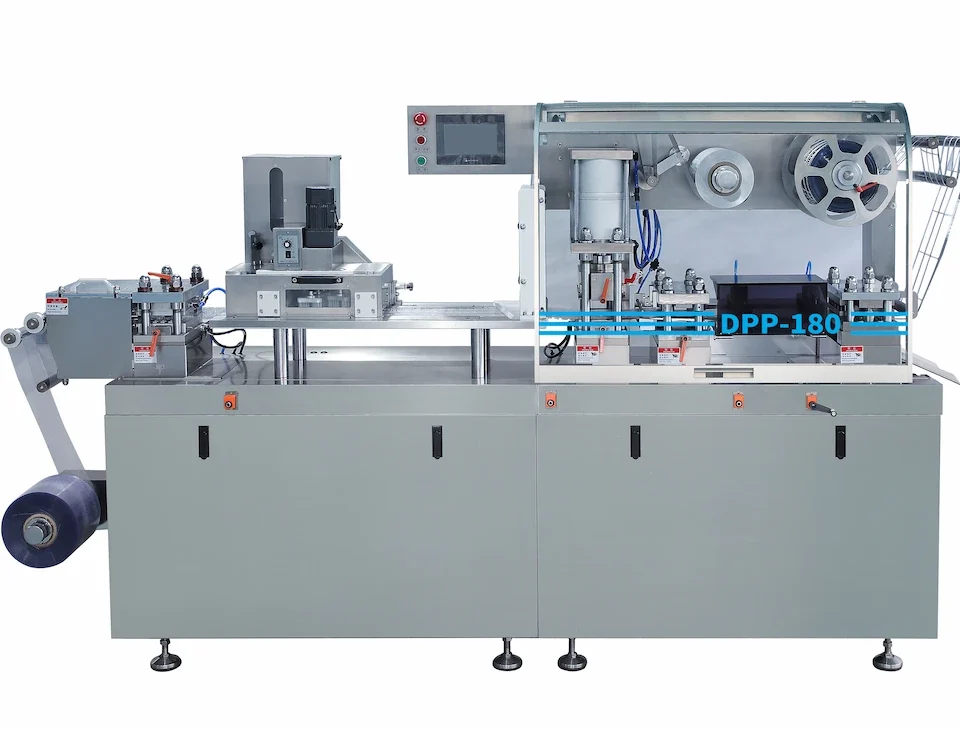
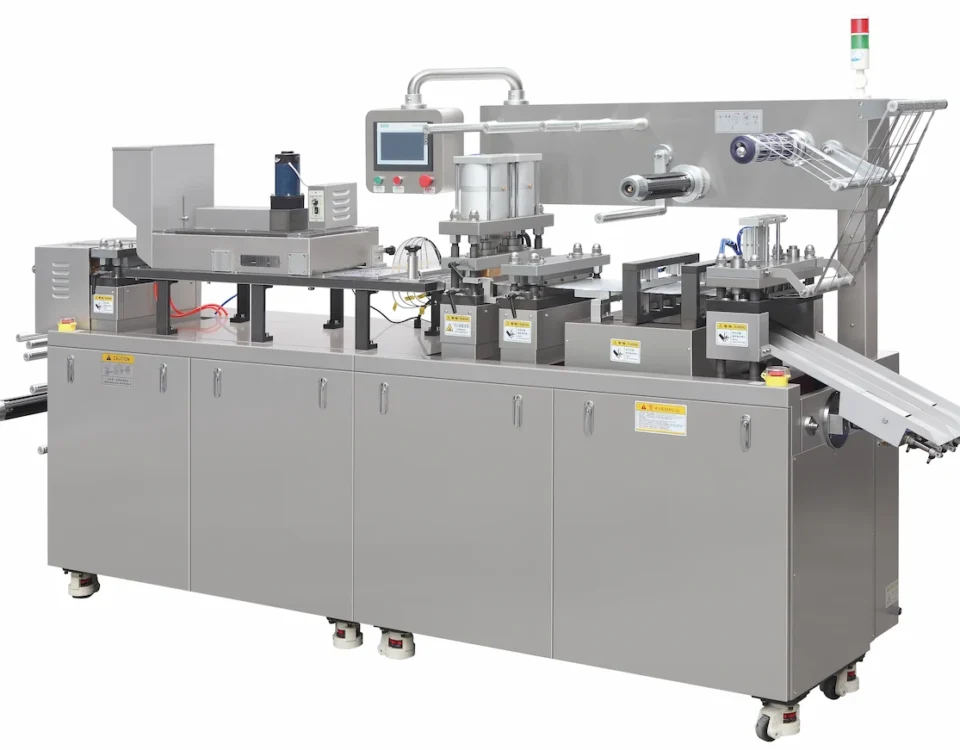
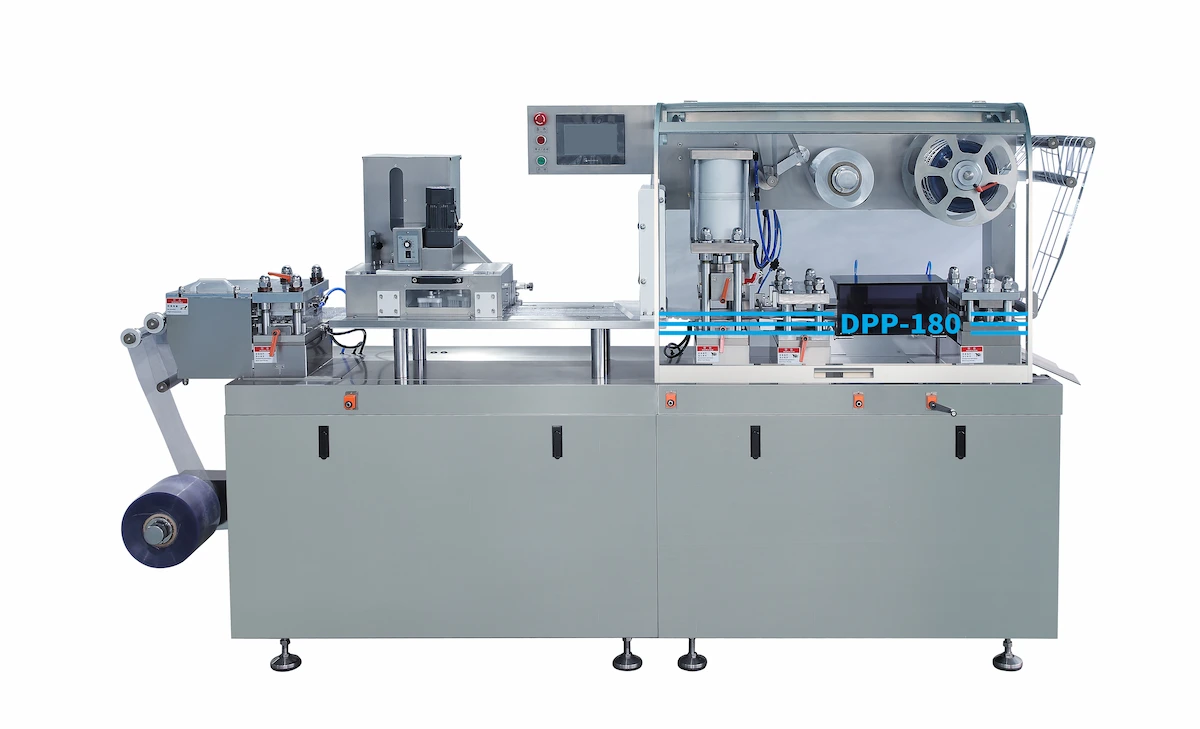
The GRAND blister packaging machine catalogue provides a starting point for reviewing catalogue-listed equipment. Individual entries include the DPP-250 blister packing machine и DPP-260Y blister packaging machine.
Use those model references when submitting your requirements, then request a version-controlled quotation for the exact supply configuration. A catalogue entry is not a substitute for confirming your product, pack drawing, materials, utilities, and test conditions.
The shortlist should follow the application assessment—not an assumption that a model number, headline speed, or similar-looking machine establishes suitability. Keep the agreed model revision, tooling schedule, options, and performance conditions together in the purchase documentation.
Have a pack drawing but no final model? Ask GRAND to review your application and request a configuration-specific quotation with a clear list of inclusions and exclusions.
7. Agree on FAT Criteria Before Ordering
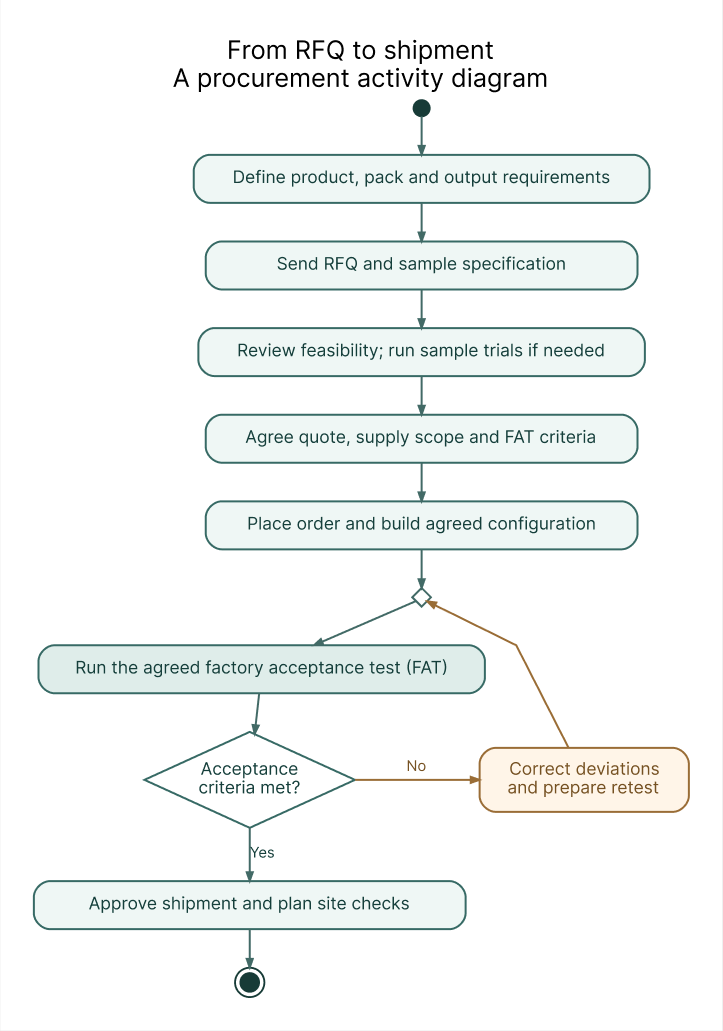
A factory acceptance test is most useful when the test protocol is settled before the equipment is built. Early sample trials can help establish feasibility; the FAT normally evaluates the manufactured equipment before shipment.
Lantech's packaging-equipment FAT guidance, illustrated with stretch-wrapping equipment, distinguishes static checks from dry and performance tests using products and packaging materials. [5] The following project-specific checklist is proposed for agreement with your supplier. It is not a published universal pharmaceutical test standard or a set of fixed acceptance thresholds.
| FAT area | What to agree and record |
|---|---|
| Configuration, samples, and materials | Machine revision, installed options, tooling identifiers, product samples, forming web, lidding, and any substitutions |
| Output and interventions | Test duration, operating settings, accepted cards, rejects, stops, replenishment, and operator interventions |
| Forming and sealing | Required dimensions and appearance; agreed seal-test method, sampling plan, and acceptance criteria |
| Inspection and rejection | Controlled challenge samples for the purchased functions, detection results, reject confirmation, and fault response |
| Changeover | Start and finish definitions, included cleaning or adjustments, and time to the first acceptable pack in the new format |
| Deviations and closure | Failures, corrections, retests, untested combinations, outstanding responsibilities, and shipment-release conditions |
The definition of changeover deserves particular attention. Timing the removal of one mould is not the same as measuring the change from the last acceptable pack of one format to the first acceptable pack of the next.
Where a product-material combination is not tested, record that limitation. Do not present one successful run as proof that every proposed format has been demonstrated. FAT results also do not replace site acceptance or the buyer's applicable packaging and process-validation responsibilities.
From RFQ to Shipment Approval
8. Send an RFQ That Can Produce a Useful Answer
You do not need to choose a final model before contacting a supplier. A precise application description is more useful than a guessed model number.
Send the product drawing and samples, pack layout, forming and lidding material details, required good output, intended formats, available utilities, inspection requirements, and expected delivery location. State which points are fixed and which remain open.
Ask the supplier to return:
- A recommended configuration with the reasons for its selection.
- A scope table showing included items, options, exclusions, and buyer responsibilities.
- Output conditions stated in finished good packs and the relevant product format.
- A proposed sample-trial plan, if needed, and a FAT scope for agreement.
- A quotation with its validity, delivery assumptions, and support terms.
Ready to discuss your application? Send your blister packaging requirements to GRAND. Include your pack drawing and target output so the discussion can move beyond a generic machine price.
Часто задаваемые вопросы
How much does a blister packaging machine cost?
There is no useful single price without a defined scope. The forming and sealing configuration, tooling, feeding, inspection, integration, and service package all affect the quotation. Compare offers against the same requirements and request an itemized options list.
Can one machine run both Alu-PVC and Alu-Alu?
Only if the quoted configuration supports both processes and materials. Ask which conversion parts, settings, or additional stations are required, and which combinations will be tested. Material capability must be confirmed for the specific machine version.
Is the highest advertised speed the right purchasing target?
Not on its own. Specify the required output of acceptable packs for your product, material, and format. Confirm the conversion between cycles, finished cards, and product units, then define how sustained output will be measured.
Does PLC control mean the whole operation is automatic?
No. A PLC can coordinate functions without automating every task. Ask which operations require manual loading, replenishment, adjustments, cleaning, or changeover, and include those responsibilities in the operating and staffing assessment.
When should the FAT take place?
Agree its scope and acceptance criteria before the order or technical specification is finalized. Conduct the FAT on the manufactured equipment before shipment, following the agreed protocol. Pre-order sample trials are a different activity and should be identified separately.
Technical References
The following manufacturer resources explain general industry principles. They are not evidence of the components, capacities, certifications, or tested capabilities of any GRAND model.
- Sepha: EZ Blister—forming, heat sealing, and cutting.
- Uhlmann: blister-machine comparison, output units, formats, and sealing principles.
- Siemens: synchronization of multiple servo-drive axes.
- Festo: pneumatic pressure, actuator performance, and monitoring.
- Lantech: preparing a factory acceptance test for packaging equipment.