Export Case Study: Fully Automatic Tablet Press Solutions for France
Top 10 Self-Adhesive Label Suppliers in Europe | Best Manufacturers
16 Types of Self-Adhesive Labels and Label Production Processes | Grand
What are Self-Adhesive Labels?
A self-adhesive (pressure-sensitive) label is simply a sticker with its own adhesive already applied on the back. In practice, you just press the label onto the product and it “sticks-and-stays” without any additional glue or heat.
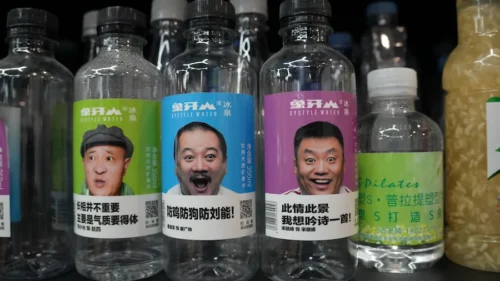
This instant-bond property (“pressure-sensitive” adhesion) means labels adhere securely with only slight pressure, making high-speed automated labeling efficient. Grand’s blog defines them as labels featuring a pre-applied adhesive layer on the reverse side, enabling clean, fast application on bottles, jars, cartons, and more.
Every self-adhesive label is a three-layer laminate: a top facestock (the printable surface), a pressure-sensitive adhesive layer, and a bottom liner (release backing). The liner protects the adhesive and feeds smoothly through labelers. The adhesive itself is a carefully formulated polymer (acrylic, rubber, or silicone) designed for the application’s needs – from removable to permanent bonds, and to resist heat, humidity or chemicals. The facestock can be film (plastic) or paper, chosen for the product environment.
Materials: Film vs. Paper Facestock
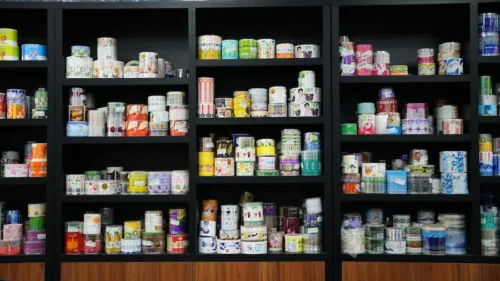
Grand emphasizes that the choice of facestock depends on product use. Film labels (made from plastic films) are durable, moisture-resistant and often have a premium look. Common film materials include:
- Polyethylene (PE)– a soft, squeezable plastic. Good for wrap labels on flexible bottles.
- Polypropylene (PP)– a clear, rigid film. Its clarity is ideal for a “no-label look” on transparent containers. PP resists water and oils, making it great for products exposed to moisture.
- Polyester (PET)– a high-strength, temperature-resistant film. PET labels hold up in extreme conditions (e.g. hot filling lines) and are very dimensionally stable.
These plastic films are widely used in beverages, cosmetics, household chemicals and food packaging. For example, many drink and personal-care brands use PP or PET facestock for clear, long-lasting labels. These facestocks can also be metallized (silver/gold) for a metallic finish.
By contrast, paper labels are the traditional, cost-effective choice when high readability is needed. Paper facestocks come matte, gloss or semi-gloss, with excellent print clarity. They are ideal for labels requiring crisp text, barcodes or lot numbers. In fact, Grand notes that pharmaceutical vials and medical packages almost always use high-quality paper labels because paper delivers sharp print and works well with security features. In short, film labels offer durability and a modern look, while paper labels offer a classic look and superior printability.
Label Styles and Finishes
Self-adhesive labels come in many styles and finishes to match a brand’s needs. Here are some popular types:
1. Clear/Transparent labels:
These use transparent BOPP, PET, or PP films so the product shows through. They are popular for a “no-label” look on glass or plastic bottles. Clear labels can be printed on one side or two (double-sided printing on clear stock) for unique effects.
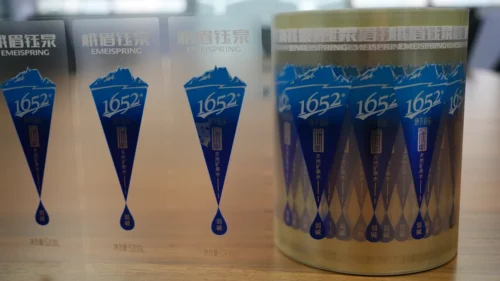 30µm PET Base 50µm Dual-Clear BOPP Single-Layer Material — Double-Sided Process Printing + Cold Silver Foiling + Gloss Varnish
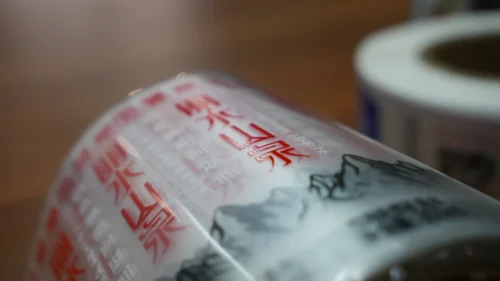
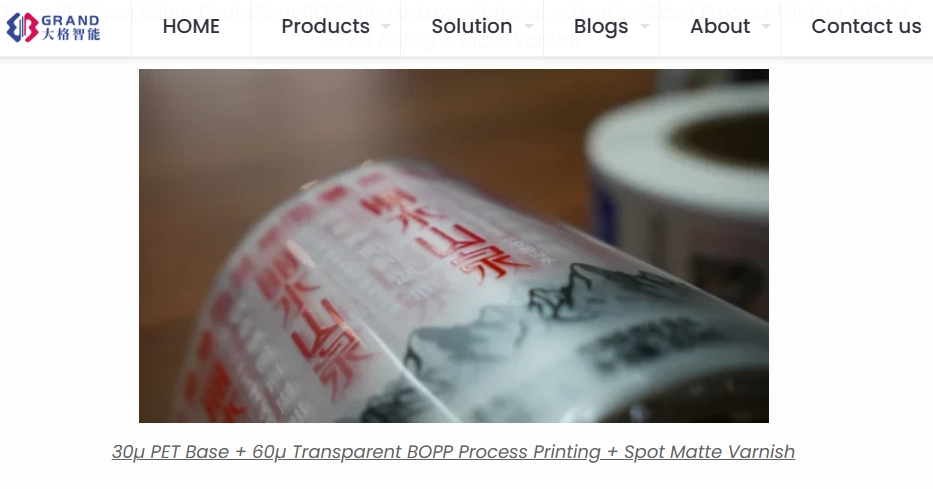
30µ PET Base + 60µ Transparent BOPP Process Printing + Spot Matte Varnish
2. Metallic labels:
Using metalized films (bright silver or gold PP) or foil stamping, these labels have a shiny, high-impact look. For example, a “silver PP” facestock provides a mirror-like finish; manufacturers may also cold-foil stamp holographic or silver foil onto film labels for a premium effect. Hot-stamping with gold foil on paper or pearl paper is another luxury option.
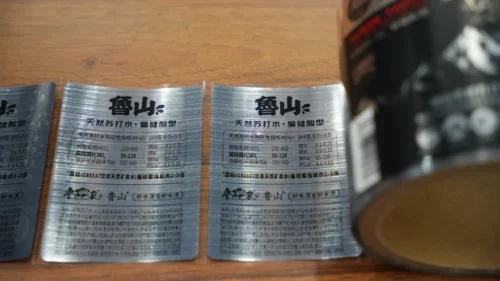
Double-Layer Composite Material, Double-Sided Printing + Spot Gloss Varnish + Spot Matte Varnish
3. Holographic / Pearl labels:
Special films like laser-etched pearlescent PET or BOPP create iridescent, “starlight” patterns. These labels shimmer in the light. They are often printed in full color and given a matte or gloss overcoat. (Grand’s sample list even includes “laser pearl” and “starlight foil” finishes for eye-catching shimmer).
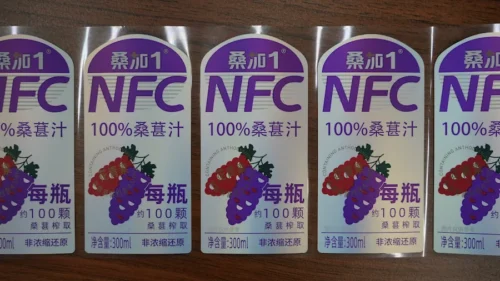
Process 30µ PET Base + 70µ Laser Pearlescent Film - Printing + Matte Varnish
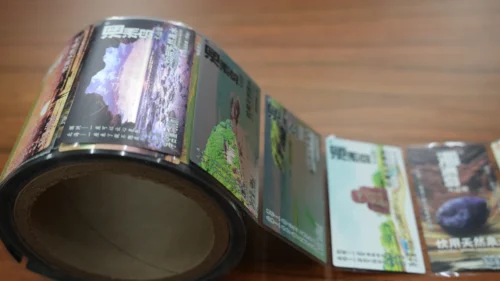
30µm PET Base + 50µm Glossy Silver PP Process Printing + Matte Varnish
4. Matte vs. Gloss finishes:
After printing, labels can be coated with gloss UV varnish (high shine, moisture barrier) or matte (silk) UV varnish (flat, non-glare look). Spot varnish (applying gloss to specific areas) creates contrast in the design. These coatings protect the print and adjust the visual feel. For instance, a food label might get a matte varnish to reduce glare, whereas a chemical container label might be glossy for easy cleaning.
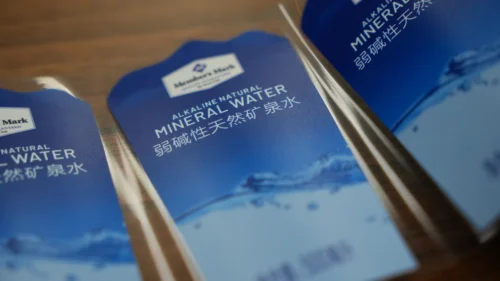
30µm PET Base + 75µm Synthetic Paper — Printed with Gloss Varnish Finish
5. Specialty effects:
Techniques like cold-foil stamping (applying metallic foil via adhesive) or hot stamping (heat-transfer gold/silver foil) add embellishment. Double-layer (laminated) labels – for example, a combination of a transparent PET layer and a printed paper layer – allow full wrap-around printing on containers. According to one Grand source, pressure-sensitive adhesives also come as “printing foils,” meaning foil-backed tapes, enabling these metallic treatments.
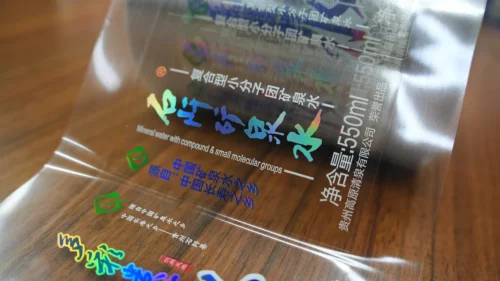
30µ PET Base 50µ Dual-Clear BOPP Process Printing + Cold Foil (Laser Silver)
In all cases, the choice of adhesive under the facestock is matched to the material and use. Some products use strong permanent glue; others need removable or repositionable adhesives. The adhesive layer must bond to the package surface (plastic, glass, metal, etc.) and withstand handling. As Nature reports, pressure-sensitive adhesives (PSAs) are typically polymer-based, balancing viscoelasticity, tack and shear strength to perform under varying conditions. In short, designing a label style involves selecting the right facestock, adhesive and finish to ensure durability and brand impact.
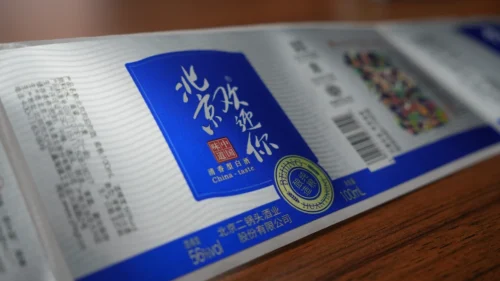
80g Silver Paper (Hot-melt Adhesive) — Process Printing + Matte Lamination
Common Label Production Processes
Label manufacturing combines printing and finishing steps. Typical production processes include:
- Printing:Labels are usually printed in rolls or sheets using flexography, offset, or digital presses. The facestock (film or paper) is fed into the press and ink is applied in one or more colors. Modern digital presses allow short runs and variable data printing (e.g. serial numbers, QR codes). Grand’s guides note that label printability is a key advantage of paper, especially for variable data.
- Lamination:For extra protection or bespoke structures, a clear overlaminate film (BOPP or PET) may be applied atop the printed facestock. This lamination adds tear strength, chemical resistance and can lock in special effects like foils. In Grand’s sample list, several items (e.g. dual-layer PET/BOPP labels) use lamination to combine materials.
- Coating / Varnishing:After printing, labels often get a UV-cured varnish. A gloss UV coat makes colors pop and adds water resistance; a matte UV coat yields a subdued look. Sometimes only parts of the label are coated (spot UV) to highlight text or graphics. Labels may also get tactile or protective coatings depending on end use.
- Foil Stamping:Hot or cold foil stamping applies metallic (gold, silver, holographic) foil accents. In cold-foil, an adhesive pattern is printed and foil is pressed onto it. Hot-foil uses heat and pressure to transfer foil from a roll onto the label. Grand’s examples include “cold stamping silver” and “hot stamping gold” processes on labels. These give premium, foil-rich finishes.
- Cutting and Slitting:Finally, printed label rolls are slit to width and die-cut into individual label shapes (round, rectangular, custom die-cuts). The liner (backing paper) supports the labels until they are applied.
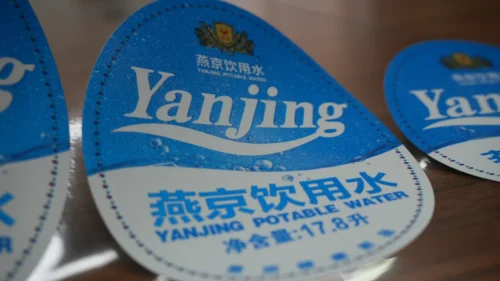
30µm PET Base + 70µm Laser Pearlescent Film Process Printing + Starlight Film
Throughout production, manufacturers must ensure the label materials feed smoothly in equipment. For example, Grand notes that the liner/backing must allow jam-free, automated application. And as Grand’s labeling-machine guide advises, label design must match the applicator: container shape dictates whether a wrap-around or tamp-blow labeler is used, and the machine must handle the chosen roll material and size.
Label Applications and Case Examples
Self-adhesive labels are ubiquitous. Beverage and food producers often use film labels for moisture resistance – e.g. clear PP labels on glass bottles or PET labels on cans. A “no-label look” clear PP sticker might wrap entirely around a transparent bottle. Personal care and household chemical brands use PET or PVC labels for durability under water or oils. Pharmaceutical and medical products typically use paper labels: Grand points out that medicine vials and cartons almost always carry high-quality paper labels for sharp text and tamper evidence. Paper labels also convey a “trusted” aesthetic on medical products.
Several industry case studies illustrate this variety. For instance, a cosmetics brand might use a holographic pearlescent PET label with matte varnish on a cream jar to convey luxury. A craft brewery might choose silver-foil stamped labels on matte paper for artisan appeal. In each case, Grand’s engineering ensures the label withstands the production line. One Grand whitepaper notes that misfeeds or tears can halt a pharma line, so labels are engineered for “high-speed integration”. In practice, Grand’s customers have applied tens of millions of these labels using Grand’s high-speed labeling machines (e.g. rotary bottle labelers) with flawless consistency.
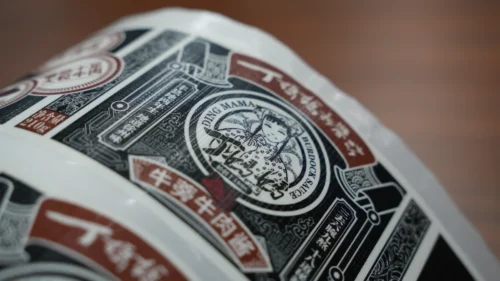
75µ Synthetic Paper Base — Printing Process + Spot Gloss Varnish + Spot Matte Varnish
Grand’s labeling solutions have deep reach in pharmaceuticals, where even minor label failure is unacceptable. They highlight three pillars: material expertise (e.g. labels that survive sterilization), regulatory support (GMP-compliant label materials), and high-speed machinery that keeps lines running. For non-pharma products (food, beverage, cosmetics), similar care goes into matching label style to brand. For example, Grand notes that beverages often use PP “no-label look” labels with glossy varnish, while daily-use cosmetics might use durable PET labels printed on both sides.
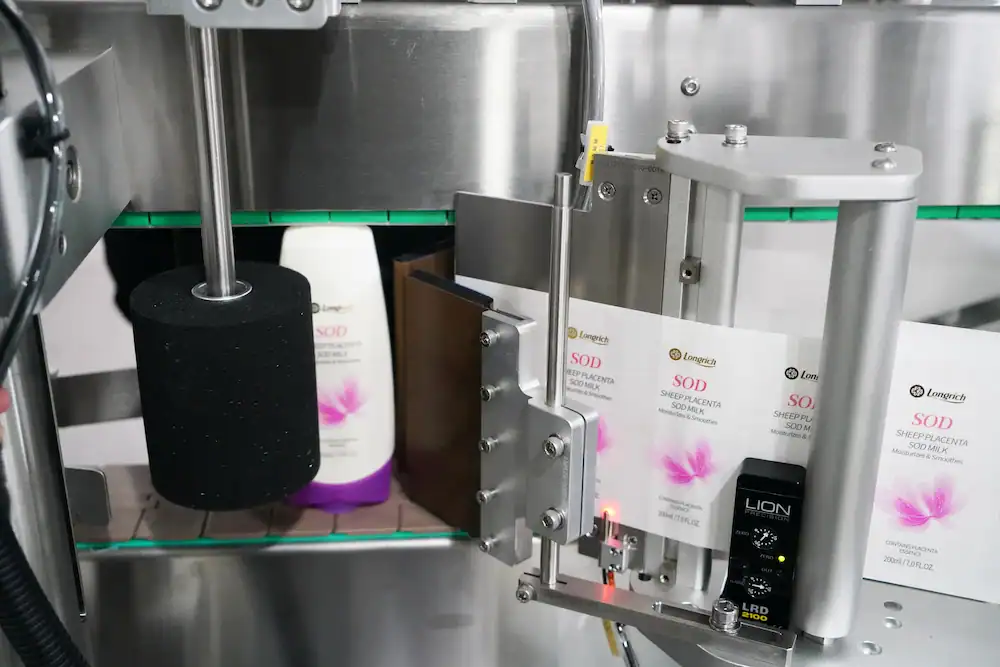
Throughout, Grand’s packaging automation equipment – from semi-automatic tabletop applicators to fully-automatic rotary labelers – is used to apply these self-adhesive labels. Grand’s labeling machines (see the “Labeling Machines & Applicators” product line) handle everything from slow artisanal batches to 10,000 bottles per hour, applying all the above label types with precision. As Grand explains, matching the right machine to the label and product (shape, speed, material) is key to a smooth process.
Grand Brand Self-Adhesive Labels
In summary, Grand’s self-adhesive labels cover a vast range of styles and processes. From simple matte paper labels to complex multi-layer holographic films, Grand can engineer nearly any pressure-sensitive label. Labels consist of a liner, adhesive, and facestock, with the adhesive and facestock chosen for the end-use environment. Common materials include PE/PP/PET films for durability and high-end looks, or paper for printability. Manufacturing processes involve advanced printing (digital, flexo, etc.), plus finishes like UV coatings, cold/hot foil, and lamination. This enables effects such as metallic silver papers, laser-etched pearl films, and selective gloss/matte varnishes. Grand’s case experience shows these labels on everything from beverage bottles to pill vials.
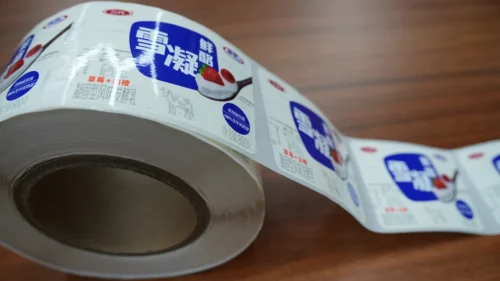
62g White Grid-Patterned Base, 75µ Reinforced Matte Synthetic Paper — Process Printing + Adhesive Glossy Lamination
Grand’s expertise in Label Production Processes means they guide customers through choices (film vs. paper, permanent vs. removable adhesive, finish type) to match the product’s needs. By leveraging Grand’s machinery (high-speed labelers and applicators) and engineering know-how, brands get self-adhesive labels that look great, stick reliably, and keep production lines running.
References:
- Influence of diatomite and its base modifications on the self-adhesive properties of silicone pressure-sensitive adhesives | Scientific Reports (nature.com)
Develop Your Business with Grand