
Ultimate Guide to Vial and Ampoule Filling Machine Selection
High Shear Mixer Granulator HLSG-10: Precision Wet Granulation
Are Pill Capsules Bad for You? Capsules vs. Powder vs. Liquid Absorption Guide
Introduction
Standing in the supplement aisle or browsing an online pharmacy can feel overwhelming. You are bombarded with choices: tablets, softgels, powders, gummies, and liquids. A common question we see in search trends is: are pill capsules bad for you? And closely following that: which form absorbs better?
Whether you are looking for the best powder supplements, considering liquid vitamins vs pill forms, or just trying to decide if you should switch your daily regimen, this guide will break down the science, the safety, and the "behind-the-scenes" manufacturing secrets that determine supplement quality.

The Big Question: Are Pill Capsules Bad for You?
Let’s tackle the elephant in the room immediately. Generally speaking, no, pill capsules are not bad for you. They are one of the most effective, safe, and convenient ways to deliver medication and nutrients.
However, the "bad" reputation often comes from misconceptions about what the capsule shell is made of.
Understanding the Shell
Gelatin Capsules: These are made from collagen (usually bovine or porcine). They are safe for most people but are not suitable for vegans or those with specific religious dietary restrictions.
Vegetarian Capsules (HPMC): Made from plant cellulose. These are hypoallergenic and preferred by those seeking plant-based options.
The only time a capsule is "bad" for you is if you have a specific allergy to the shell material or if the manufacturer uses low-quality additives (fillers, dyes, or preservatives). This is why sourcing supplements from reputable brands that use high-precision manufacturing is crucial—a topic we will touch on later.
Capsules vs. Powder vs. Liquid: What Absorbs Better?

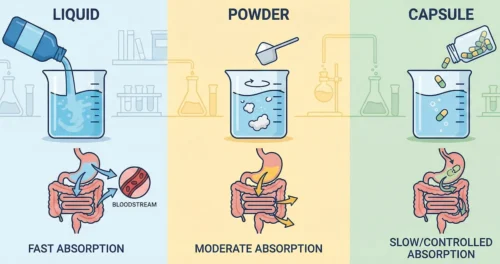
When it comes to bioavailability—how much of the substance actually enters your bloodstream—the "form" matters. Here is the hierarchy of absorption.
1. Liquids (The Speed Kings)
If you are asking, "are pills or liquid medicine more effective?" strictly regarding speed, liquids usually win.
Pros: They don’t need to be broken down by stomach acid. The body can assimilate the nutrients almost immediately.
Cons: Taste can be unpleasant, and they often have shorter shelf lives.
Best for: Children, the elderly, or specific searches like "the best liquid vitamins" for people who cannot swallow pills.
2. Powders (The Versatile Middle Ground)

Powders, such as protein or collagen, have a high surface area, allowing for rapid absorption once mixed with fluid.
Pros: great for large doses (like 5g of Creatine or fiber).
Cons: Inconvenient to carry around; requires mixing.
Comparison: When looking at psyllium capsules vs powder, powder is often cheaper and better for high doses, while capsules are better for avoiding the texture and taste.
3. Capsules (The Targeted Delivery)

Capsules are designed to dissolve within minutes of reaching the stomach.
Pros: They protect sensitive ingredients from oxygen and moisture. They are tasteless and odorless.
Do gel caps work faster? Yes, liquid-filled gel caps (softgels) typically break down faster than hard tablets, offering a middle ground between liquid speed and pill convenience.
4. Tablets (The Slow Release)

Tablets are compressed powder. They are often the hardest for the body to break down, sometimes passing through the system only partially absorbed if they are made poorly.
Deep Dive: Liquid Gel vs. Tablet vs. Standard Capsules
Let’s break down specific scenarios you might face.
The Multivitamin Debate
If you search for "centrum liquid multivitamin near me," you are likely looking for ease of swallowing. Liquid vitamins are excellent, but they are hard to dose precisely. A capsule, however, offers a pre-measured, exact dose every single time.
The Effectiveness of Medicine
Are pills or liquid medicine more effective? For pain relief (like ibuprofen), liquid gel vs tablet is a common debate. Liquid gels (solubilized medication inside a gelatin shell) will generally provide faster relief than a compressed tablet because the drug is already dissolved. However, for maintenance medication that needs to release slowly over 24 hours, a standard tablet or specialized capsule is actually superior.
How to Spot Quality: It Starts with the Manufacturing

As a consumer, you look at the bottle. But the quality of that supplement was determined long before it reached the shelf. It starts in the manufacturing facility.
Whether you are buying the best powder supplements or high-end capsules, the consistency of the product is key.
The Importance of the Mix
Have you ever opened a capsule and found clumps? or taken a scoop of powder that tasted different than the last scoop? That is a result of poor mixing. High-quality supplements are created using advanced technology like the Horizontal Ribbon Blade Mixer. This industrial machine ensures that every microgram of active ingredient is perfectly blended with the carrier powder. If the manufacturer doesn't use a high-grade mixer, one capsule might have too much vitamin, and the next might have none.
The Precision of the Fill
When asking "are pill capsules bad for you," the danger often isn't the capsule itself, but the hygiene and dosage accuracy. Premium brands utilize automated machinery like a Capsule Filling Machine.
These machines ensure:
Hygiene: Human hands never touch the product.
Accuracy: Every capsule has the exact milligram weight.
Integrity: The capsule is sealed tight to prevent oxidation.
If you are a business owner looking to produce supplements, or a consumer curious about how your vitamins are made, understanding the role of this machinery is vital. Reliable equipment guarantees that the capsules vs powder debate is strictly about preference, not about safety defects.
Specific Scenarios: Which Should You Choose?
To help you decide, let’s look at specific comparisons based on your likely needs.
Scenario A: Fiber Intake (Psyllium)
The Search: Psyllium capsules vs powder.
The Verdict: If you need a massive dose of fiber (metamucil style), go with powder. You would need to swallow 5-10 capsules to get the same effect as one scoop of powder. However, if you travel often, capsules prevent the mess.
Scenario B: Fast Pain Relief
The Search: Do gel caps work faster?
The Verdict: Generally, yes. If you have a headache, a liquid-filled gel cap will dissolve and enter your system faster than a hard chalky tablet.
Scenario C: Daily Vitamins
The Search: Liquid vitamins vs pill.
The Verdict: If you have a sensitive stomach, liquids are gentler. However, capsules are often cheaper and shelf-stable for longer. If you choose capsules, look for "veggie caps" if you want to avoid gelatin.
Frequently Asked Questions
1. Do liquid vitamins lose potency faster? Yes. Once a bottle of liquid vitamins is opened, it is exposed to air and bacteria. They often require refrigeration. Capsules protect the ingredients until the moment you swallow them.
2. Why do some capsules float? Most capsules trap a tiny bubble of air inside during the filling process. This is normal and actually helps the capsule dissolve quickly in your stomach acid.
3. Can I open a capsule and pour the powder out? Usually, yes. This converts a capsule into a "powder" supplement. However, never do this with "timed-release" or "enteric-coated" medications, as they are designed to bypass the stomach.
4. What is the best way to swallow capsules? Unlike tablets, which you should tilt your head back to swallow, capsules float. So, put the capsule in your mouth, take a sip of water, and tilt your chin down toward your chest. The capsule will float to the back of your throat, making it easier to swallow.
Conclusion
So, are pill capsules bad for you? Absolutely not. They are a marvel of modern pharmaceutical engineering, offering a precise, tasteless, and effective way to manage your health.
While liquid vitamins may offer slightly faster absorption, and powders offer dosage flexibility, the humble capsule remains the gold standard for convenience and stability.
The next time you pop a vitamin, take a moment to appreciate the science behind it. From the precise blending in a Ribbon Blade Mixer to the exact dosing of a Capsule Filling Machine, high-quality technology is what keeps your supplements safe, effective, and beneficial for your health.
Make your choice based on your lifestyle:
Choose Liquids for speed and ease of swallowing.
Choose Powders for high-dosage bulk supplements (like protein).
Choose Capsules for convenience, taste masking, and travel.
Your health journey is personal—choose the form that fits your life best.
Author's Note:
If you are in the pharmaceutical or nutraceutical industry, ensuring your product meets the "quality" standards mentioned above is how you win customer trust. Upgrading your production line with reliable mixers and fillers is not just an operational cost; it is a marketing asset.
Disclaimer: This article provides general information and discussions about health and related subjects. The information and other content provided in this blog, or in any linked materials, are not intended and should not be construed as medical advice




Develop Your Business with Grand