
Blister Sealing Temperature: Heat Seal Process Window
Tablet Friability Test: Procedure, Formula and Limits
Kısa Cevap: A tablet friability test measures the percentage of mass lost when compressed tablets undergo controlled tumbling. USP <1216> uses 100 drum revolutions at 24–26 rpm. For most products, a loss of no more than 1.0% is considered acceptable; obvious cracking, splitting or breakage is a separate failure condition. Apply the approved product specification.
This guide focuses on compressed, uncoated pharmaceutical tablets and connects laboratory results to compression, transfer and packaging checks. All numerical sample results below are illustrative calculations, not GRAND production measurements or product-release data.
1. What Is a Tablet Friability Test?
Tablet friability describes how readily a compressed tablet sheds material when it experiences abrasion and impact. A friability tester subjects a group of tablets to repeated tumbling in a rotating drum. The difference between the initial and final sample mass, expressed as a percentage, indicates the material lost under the defined test conditions.
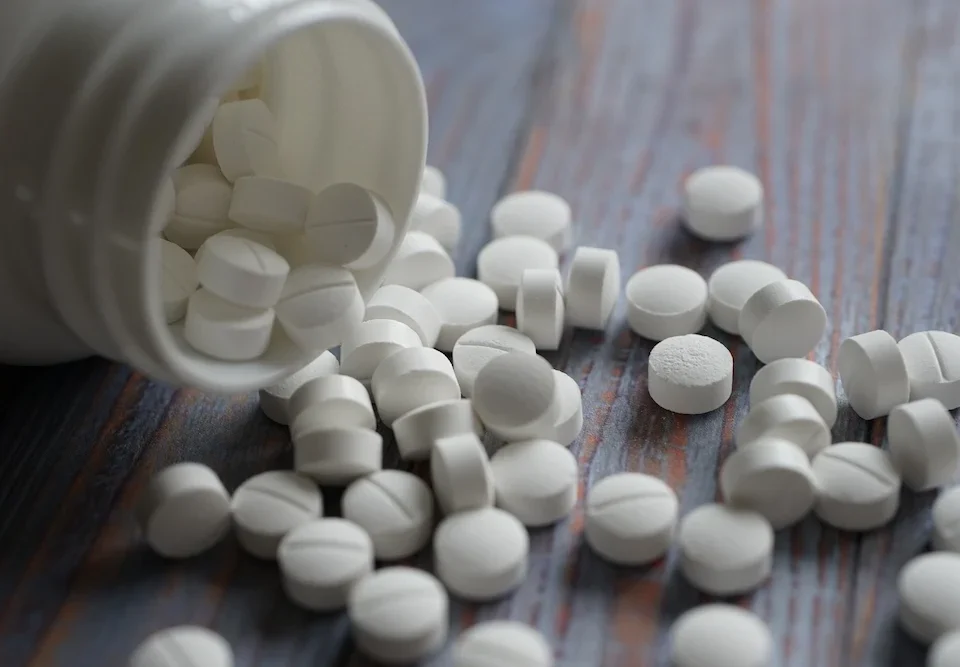
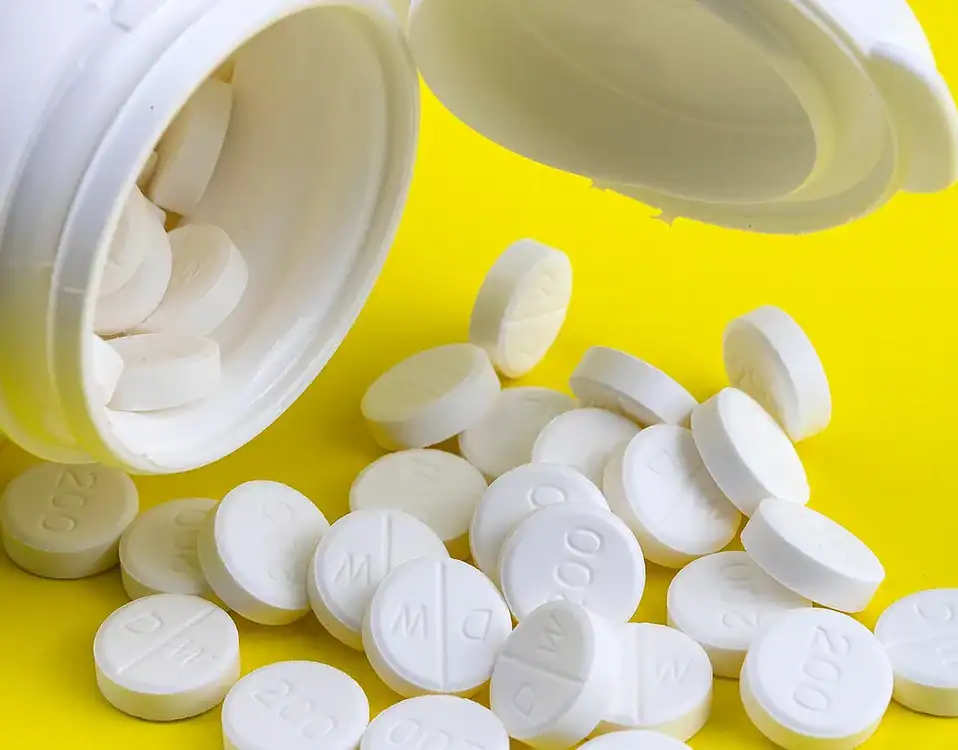
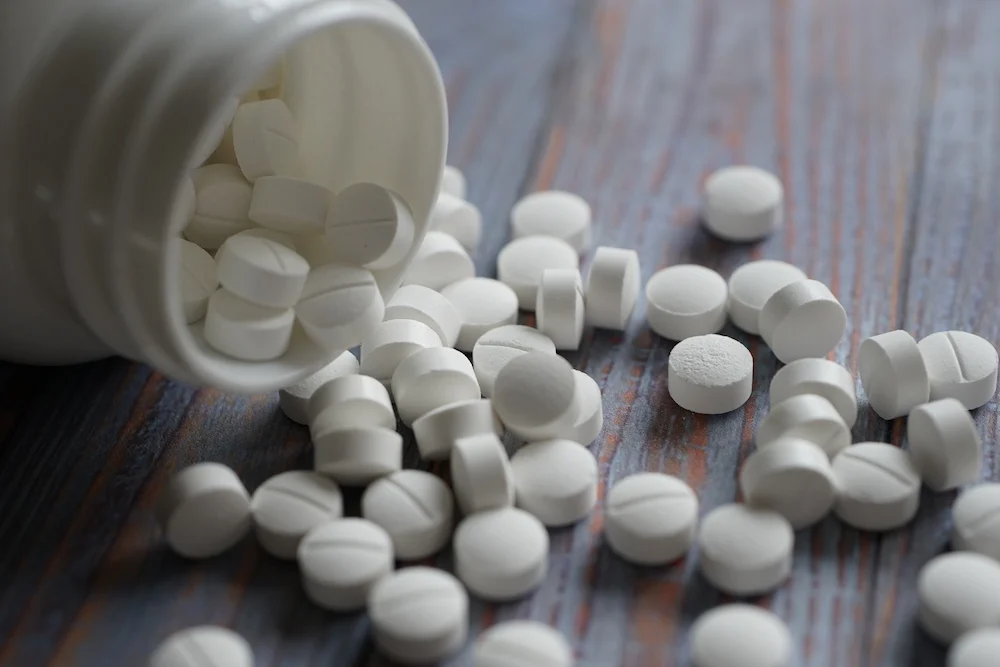
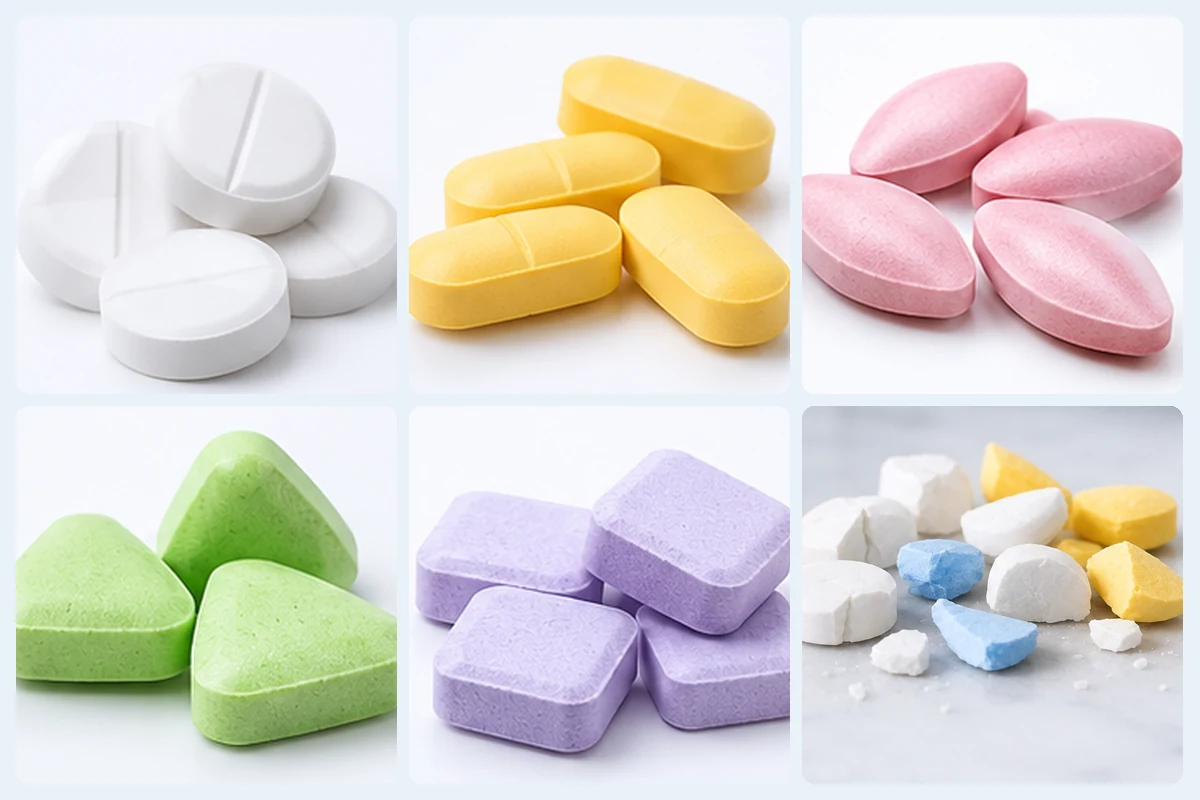
Friability matters between the tablet press and the final package. Tablets can pass through a discharge chute, dedusting equipment, transfer containers, a counting system or a blister feeder before being packed. A weak tablet may develop chipped edges or generate dust during these steps. Establishing a laboratory baseline before packaging helps distinguish material weakness from damage introduced by handling equipment. The illustrations show different tablet shapes and examples of visible damage; each friability test should use representative tablets of the same product.
The test supplements tablet breaking-force measurements. It does not quantify active ingredient content, guarantee dissolution performance or reproduce every mechanical stress experienced on a production line.
2. USP <1216> Tablet Friability Test Conditions
Use the applicable pharmacopoeial method and your approved test procedure. The 2023 USP <1216> harmonization text and the 2025 International Pharmacopoeia describe the same basic tumbling approach for most compressed, uncoated tablets. Their principal test conditions are summarized below (references 1 and 2).
| Parametre | Standard method guidance |
|---|---|
| Drum revolutions | 100 |
| Rotational speed | 24–26 rpm (nominal 25 rpm) |
| Tablet unit mass ≤ 650 mg | Select whole tablets totaling as close as possible to 6.5 g |
| Tablet unit mass > 650 mg | 10 whole tablets |
| Sample preparation | Remove loose surface dust before both weighings |
| Typical mass-loss criterion | ≤ 1.0% for most products; assess visible damage separately |
A conventional instrument has a transparent drum with an internal diameter of 283–291 mm and an internal depth of 36–40 mm. A curved projection lifts and tumbles the tablets. At 25 rpm, 100 revolutions take approximately four minutes. A timer alone is insufficient: verify that the required number of revolutions and speed are achieved.
As an example of sample selection, a nominal 250 mg tablet gives 26 tablets for a target sample of 6.5 g. A nominal 800 mg tablet falls into the 10-tablet category. Use the actual initial mass from the balance when calculating friability, rather than the nominal target mass.
The FDA’s ICH Q4B Annex 9 guidance addresses regulatory recognition of selected harmonized tablet-friability texts. Confirm the method applicable to the market and product under review (reference 3).
3. Tablet Friability Test Procedure: Five Steps
A repeatable test begins with a representative sample, a suitable balance and a qualified friability instrument. The following sequence summarizes the work; the approved laboratory procedure governs the exact handling, equipment checks and documentation.
- Select and identify the sampleUse intact, representative tablets from the approved sampling location.
- Remove loose dust and weighRecord the initial sample mass W₀ using an appropriate calibrated balance.
- Run the friability drumComplete the defined rotation cycle with the qualified instrument.
- Remove loose dust and reweighRecord final mass W₁ and inspect the whole sample for damage.
- Calculate and assessApply the product’s approved criteria, including the visual condition of the tablets.
Use consistent dedusting before and after testing. Removing more material during one weighing step than the other can bias the result. Keep sample identity, collection point, time, instrument identification and test conditions in the record. Inspect for fragments and visible damage rather than relying on the numerical result alone.
If the tablet size or geometry prevents free tumbling, the harmonized method describes tilting the drum base by about 10° from horizontal so that tablets can separate and fall freely. Hygroscopic tablets require an appropriately controlled humidity environment. Use these provisions only as specified in the applicable method and approved procedure.
4. Tablet Friability Formula and Calculation
Calculate friability from the difference between the initial and final mass of the tested sample:
W₀ is the initial dedusted sample mass and W₁ is the final dedusted sample mass. Use the same mass units for both values and retain the unrounded result according to the laboratory’s approved calculation and reporting rules.
Worked example: 26 tablets at a nominal 250 mg
Assume the actual initial mass of the 26-tablet sample is 6.500 g. After the defined drum cycle and dedusting, the balance reads 6.448 g. The measured mass difference is 0.052 g.
If the approved specification uses the typical 1.0% criterion and no unacceptable visible damage is observed, this hypothetical sample meets that criterion. The table illustrates why mass loss alone does not determine every outcome.
| Initial mass | Final mass | Loss | Interpretation |
|---|---|---|---|
| 6.500 g | 6.448 g | 0.80% | Within the example limit if visual condition is acceptable |
| 6.500 g | 6.422 g | 1.20% | Above the example target; follow the approved investigation and repeat-test procedure |
| 6.500 g | 6.474 g | 0.40% | Fails the cited method if obvious cracking or breakage is present |
5. Tablet Friability Limits: Acceptance and Retesting
The commonly cited 1.0% value is a general benchmark for most products under the harmonized method, not a universal specification for every dosage form. The method also accounts for obvious cracked, cleaved or broken tablets. Special tablet categories, including effervescent and chewable tablets, may have different requirements.
Under the harmonized procedure, testing is normally performed once. If results are difficult to interpret or mass loss exceeds the target, the harmonized method describes two additional tests and assessment of the mean of all three. Obvious cracked, cleaved or broken tablets after tumbling constitute a failure under the cited method. Apply the laboratory’s approved sampling and out-of-specification procedures; do not select favorable results or continue testing until a pass appears. Document the visual observations and any investigation decision alongside the calculation.
For coated tablets or other dosage forms, determine whether a different applicable test or product-specific limit is required. A successful laboratory result is evidence of mechanical resistance under the defined conditions, not automatic authorization to release the batch.
6. Friability vs. Tablet Hardness: What Is the Difference?
Tablet hardness, more precisely tablet breaking force, measures the force required to fracture an individual tablet under a specified loading arrangement. Friability evaluates the collective response of a sample to repetitive impact and abrasion. A tablet can have acceptable breaking force while still losing material around its edges.
| Test | Measured outcome | What it helps assess |
|---|---|---|
| Friability | Mass loss (%) after tumbling | Resistance to repeated abrasion and impact |
| Breaking force (hardness) | Force to fracture a tablet (typically N) | Resistance to an applied load |
| Disintegration | Time for dosage form to break apart under specified conditions | Physical breakup behavior |
| Dissolution | Drug release measured over time | Release performance under the specified test |
Formulation and compression changes should be evaluated against all applicable quality attributes. Increasing compression force solely to lower friability may alter other properties, including disintegration or dissolution. See our tablet hardness guide for a separate explanation of breaking force.
7. What Causes High Tablet Friability?
High friability can originate in the formulation, tablet geometry, compression process or subsequent handling. Look for evidence before adjusting machine settings. In a 2017 study, Paul and Sun investigated how tablet mechanical properties, compaction pressure and porosity relate to friability in several excipients and mixtures. The authors found different friability behavior among the viscoelastic, brittle and ductile excipients studied. Their results support evaluating the formulation together with mechanical properties and compaction conditions, rather than transferring one compression setting between products (reference 4).
| Possible cause | What to investigate |
|---|---|
| Weak particle bonding | Binder and excipient suitability, material characteristics and approved formulation records |
| Inadequate compression conditions | Recorded compression force, speed, tablet weight, thickness and breaking force |
| Lubrication or granulation variation | Approved blending history, granule properties and moisture records |
| Tablet geometry or worn tooling | Edge shape, embossing, punch and die condition, location pattern of chips |
| Mechanical handling damage | Discharge, transfer drop heights, guide contact, accumulation and packaging infeed |
Separate a trend across all tablets from defects concentrated at a particular press station or transfer point. Compare representative samples and investigate deviations through the approved quality system. Do not increase compression force beyond authorized process limits or bypass guards to inspect operating equipment.
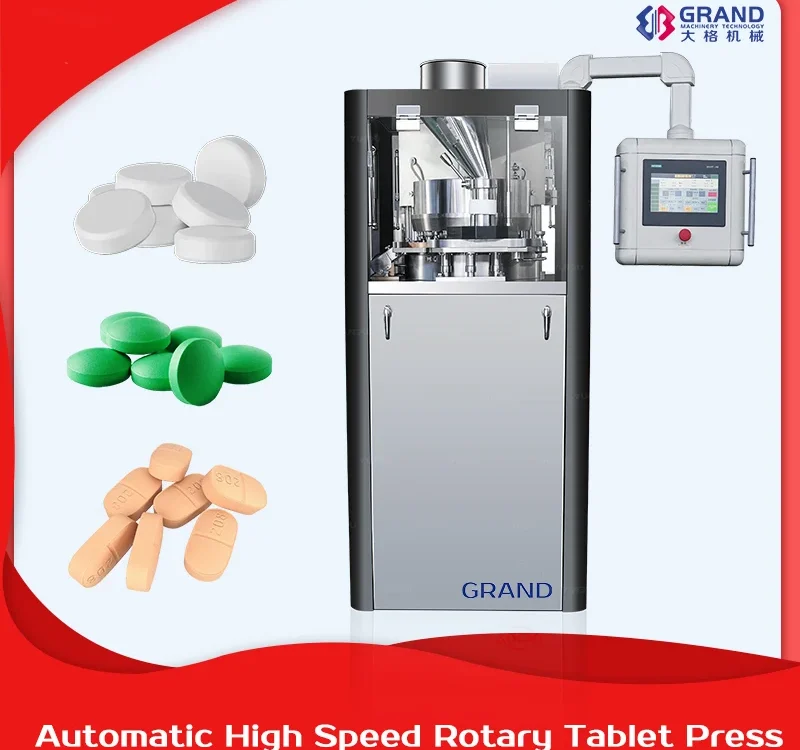
For an introduction to compression equipment and tablet formation, see how a modern tablet press produces tablets.
8. How to Troubleshoot Tablet Damage Before Packaging
Use matched sampling points to determine whether damage is already present after compression or appears during transfer. This practical approach is useful when a quality team sees dust in bottles or chipped tablets arriving at a blister feeder, even though previous laboratory results appeared acceptable.
| Konum | Checks | Interpretation |
|---|---|---|
| Press discharge | Visible defects, breaking force and friability from representative tablets | Establish the starting condition |
| After dedusting or transfer | Compare appearance and dust with the discharge sample | Identify a possible handling-related change |
| Before counting or blister filling | Inspect representative tablets and record the infeed condition | Identify damage before packaging |
| Finished package | Inspect visible chips, fragments, counts and package condition using approved methods | Review whether packaging introduces additional damage |
Keep collection times, lots and equipment conditions comparable. If later samples contain more visible damage, inspect the intervening stages under authorized safe conditions. A sampling comparison can identify a likely location for further investigation; it does not prove causation by itself. The laboratory friability procedure remains a separate standardized test.
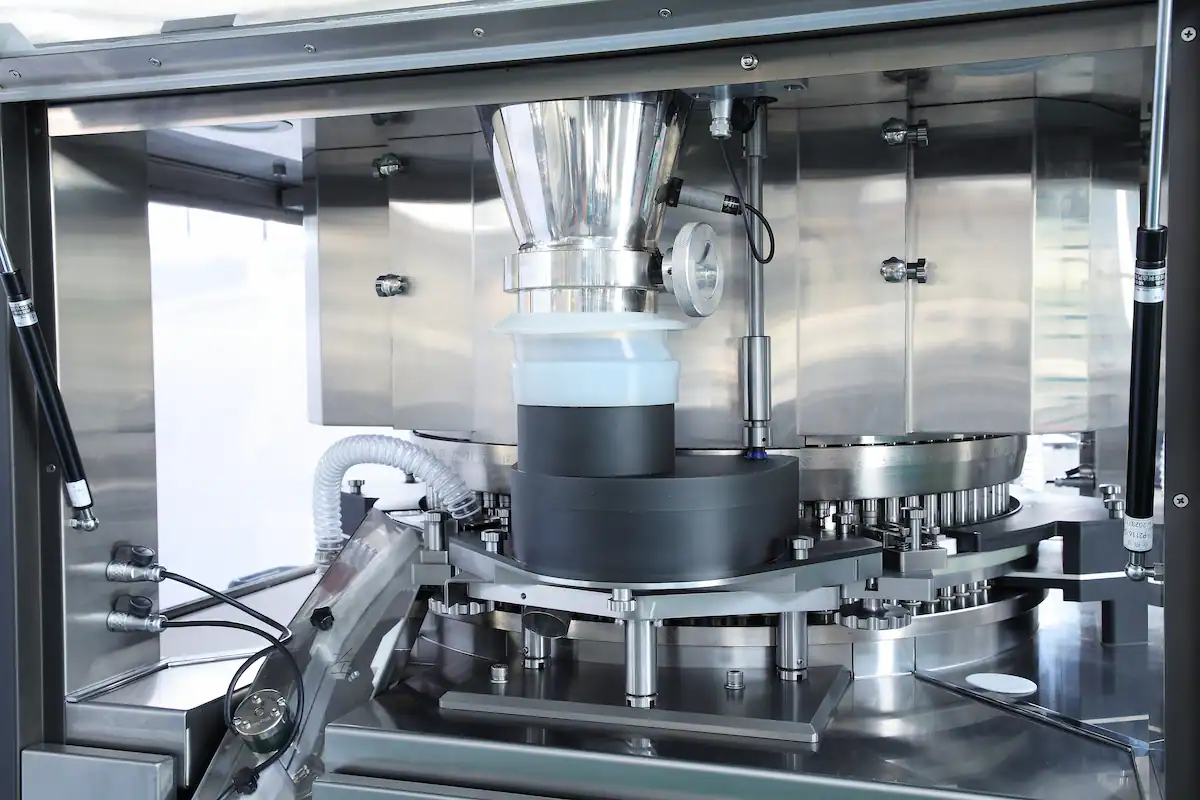
When selecting a tablet press or integrating downstream equipment, prepare your tablet dimensions, formulation characteristics, desired output, product quality targets and packaging format. Review the proposed compression, discharge and transfer arrangement with the supplier. See the GRAND GZPK-660 automatic tablet press for the listed machine configuration. Its equipment specifications are distinct from the product-specific friability target.
For bottle filling, our tablet counting machine guide explains downstream equipment options. For blister packing, refer to our blister packaging defects guide for feeding and damaged-product checks. Include representative tablets in the equipment acceptance plan and agree on the inspection evidence and limits before the trial.
9. Sıkça Sorulan Sorular
What is the usual tablet friability limit?
The harmonized procedure describes a mass-loss benchmark of no more than 1.0% for most products. Obvious cracking, cleaving or breakage is a separate failure condition. Use the product’s approved specification.
How many tablets are required for a friability test?
For a unit mass of 650 mg or below, select whole tablets totaling approximately 6.5 g. Above 650 mg, the harmonized procedure specifies ten whole tablets. Calculate using the measured initial sample mass.
How long does a tablet friability test take?
The drum completes 100 revolutions at 24–26 rpm under the harmonized method. At nominal 25 rpm, that is approximately four minutes of rotation, excluding preparation and weighing.
Can a sample with less than 1% mass loss still fail?
Yes. Obvious cracked, cleaved or broken tablets after tumbling constitute a failure condition in the cited method, even when the calculated mass loss is below the usual benchmark.
Does higher tablet hardness always reduce friability?
No. Breaking force and friability measure different aspects of tablet mechanical behavior. Geometry, formulation and process conditions can affect their relationship. Confirm other quality attributes when changing compression.
Can a tablet counting machine replace friability testing?
No. A counting machine counts units and may have configured inspection functions, while a friability instrument measures mass loss under defined tumbling conditions. Assess the intended counting and inspection configuration separately.
Çözüm
A useful tablet friability test combines controlled tumbling, consistent weighing, a correct mass-loss calculation and inspection of the sample. The result helps evaluate tablet mechanical resistance before packaging. When the test or finished-pack inspection raises a concern, compare formulation, compression and downstream handling records before choosing a correction.
Referanslar
- United States Pharmacopeia. General Chapter <1216> Tablet Friability, Stage 4 Harmonization. Official August 1, 2023.
- World Health Organization. The International Pharmacopoeia, 13th edition (2025), Tablet friability.
- U.S. Food and Drug Administration. Q4B Annex 9: Tablet Friability General Chapter. April 2010.
- Paul S, Sun CC. Dependence of Friability on Tablet Mechanical Properties and a Predictive Approach for Binary Mixtures. Pharmaceutical Research. 2017;34(12):2901–2909. DOI: 10.1007/s11095-017-2273-5.
İşletmenizi Grand ile Geliştirin