
Approval of Acetazolamide Sustained-Release Capsules in China: The Story Behind the Pharmaceutical Machinery
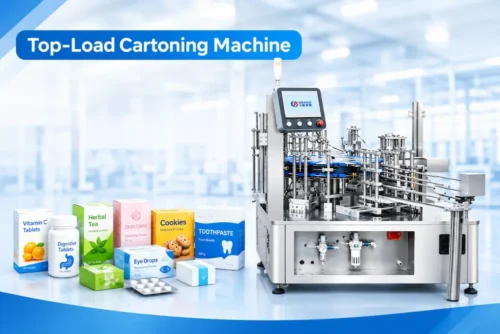
Cartoning Machine: Top-Load Packaging Guide
A reliable cartoning machine plays an important role in modern packaging lines, helping manufacturers improve packaging efficiency, maintain consistent product presentation, and reduce manual labor. Among the available solutions, the top-load cartoning machine is particularly useful for products that need to be placed into cartons from above, while a horizontal cartoning machine is often suitable for products that can be inserted from the side.
For manufacturers looking to build a complete packaging line, the process does not end when a product is packed into a carton. Downstream equipment, such as case packers, a box taping machine, and a wrapping machine for boxes, can help prepare finished packages for storage, transportation, and export.
In this guide, we explain how a top-load cartoning machine works, compare it with horizontal cartoning equipment, and explore how integrated packaging solutions can support efficient production.
1.What Is a Top-Load Cartoning Machine?
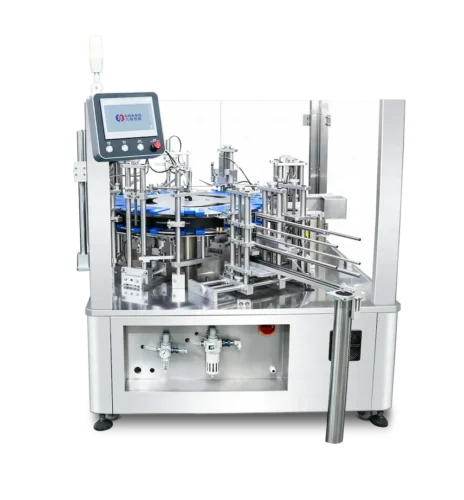
A top-load cartoning machine is a type of cartoning machine that places products into cartons through an open top. Instead of pushing products through a side opening, the machine positions them from above, making this method suitable for selected products that require careful placement or a specific arrangement inside the carton.
Depending on the product and machine configuration, the loading system may use counting devices, mechanical placement, gravity-assisted feeding, or automated pick-and-place mechanisms.
Top-load cartoning machines can be configured for various applications, including food products, confectionery, cosmetics, healthcare products, and certain pharmaceutical items. For example, suitable digestive tablets, bottles, pouches, or grouped products may be packed into cartons when the product format and machine design are compatible.
How Does a Top-Load Cartoning Machine Work?
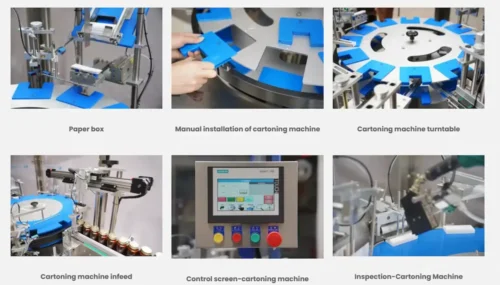
A typical cartoning process includes the following steps:
- Carton feeding:Flat carton blanks are supplied from a magazine.
- Carton forming:The machine opens and forms each carton.
- Product feeding:Products are conveyed, counted, or grouped according to the required packaging format.
- Top loading:Products are placed into the open carton from above.
- Carton closing:The top flaps are folded and secured using a suitable tuck-in or adhesive-sealing method.
- Finished carton discharge:Completed cartons move to the next stage of the packaging line.
The exact process depends on product characteristics, carton specifications, and the required production output.
2.Key Benefits of a Top-Load Cartoning Machine
Flexible Product Placement
One of the main advantages of a top-load cartoning machine is its flexible loading method. Products can be placed directly into an open carton, which can be useful when they are difficult to insert horizontally or need to follow a specific arrangement.
With a suitable feeding and positioning system, manufacturers can also pack multiple items into one carton while maintaining a consistent product layout.
Adaptability to Different Products
Some products are bulky, irregularly shaped, or difficult to handle with conventional horizontal insertion. A properly configured top-load cartoner can accommodate suitable product dimensions and carton layouts, subject to testing and machine specifications.
This flexibility makes top-load cartoning equipment worth considering for manufacturers handling different products or packaging formats.
Improved Packaging Efficiency
An automatic cartoning machine can combine carton forming, product counting, loading, and closing into a coordinated process. Automation can reduce repetitive manual handling and help maintain consistent packaging quality.
When connected to upstream production equipment and downstream packing systems, the cartoning machine can also help improve workflow and reduce unnecessary transfers between production stages.
Consistent Carton Presentation
Accurate product placement and controlled carton closing help create a neat, repeatable package. This is important for products sold through retail channels, as well as for products that must be packed securely for distribution and export.
3.What Is a Horizontal Cartoning Machine?
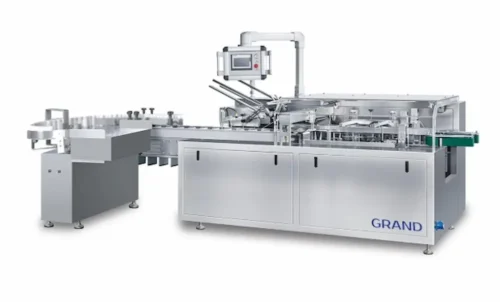
A horizontal cartoning machine is an automated packaging system that inserts products into folding cartons from the side or end. It is widely used for products that can be positioned and transferred horizontally during the packaging process.
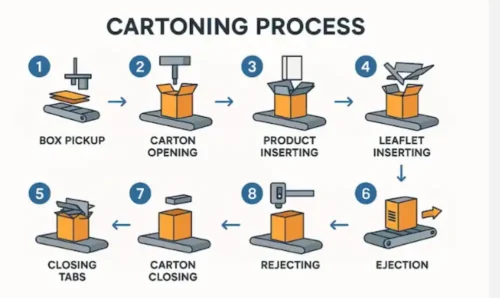
A typical horizontal cartoning machine performs several steps: picking a flat carton blank, opening the carton, inserting the product, and closing the carton with tuck-in flaps or adhesive.
Depending on the machine configuration, additional functions such as leaflet insertion, product counting, batch coding, and inspection can also be integrated into the packaging line.
Common Applications
Horizontal cartoning machines are suitable for a wide range of products, including:
- Pharmaceuticals: Blister packs, medicine bottles, and medical products.
- Food and Beverage: Biscuits, chocolate bars, and individually wrapped products.
- Cosmetics and Personal Care: Toothpaste tubes, lotion tubes, and soap bars.
- Consumer Goods: Small household products and packaged accessories.
Key Advantages
Horizontal cartoners are particularly useful for applications that require controlled product positioning, consistent insertion, and integration with upstream packaging equipment. They can also support leaflet insertion and different carton-closing methods, depending on the model.
For manufacturers handling products with regular shapes or established horizontal feeding processes, a horizontal cartoning machine can provide an efficient and repeatable packaging solution.
4. Top-Load vs. Horizontal Cartoning Machine
A horizontal cartoning machine inserts products into cartons from the side or end. It is commonly used for products that can be transferred horizontally, such as blister packs, tubes, bars, and certain packaged consumer goods.
The main difference between these two types of cartoning machines is the product-loading direction.
Comparison factor | Top-load cartoning machine | Horizontal cartoning machine |
Loading direction | From above | From the side or end |
Product handling | Top-down placement | Horizontal transfer or insertion |
Typical applications | Suitable bottles, pouches, grouped items, and selected irregular products | Blister packs, tubes, bars, and flat packs |
Key consideration | Top access and product arrangement | Product orientation and insertion stability |
Best-fit solution | Products that benefit from top loading | Products suited to horizontal feeding |
Neither machine is universally better. The right choice depends on product shape, carton design, required output, and available production space. Manufacturers should evaluate product samples and packaging requirements before selecting a cartoning machine.
5. From Cartoning to Case Packing: Building a Complete Packaging Line
A cartoning machine handles primary secondary-packaging tasks by placing products into individual cartons. For many manufacturers, however, these cartons must then be grouped into shipping cases or prepared for palletized transportation.
This is where downstream packaging equipment becomes important.
A box taping machine is used to seal shipping cartons with adhesive tape. When integrated with a suitable case-packing process, it can help standardize carton sealing and reduce manual work.
A wrapping machine for boxes can provide an additional layer of protection, depending on the packaging format. For example, suitable systems may wrap grouped boxes or palletized loads with stretch film to help stabilize packages during storage and transportation.
A complete packaging line may therefore include:
- A cartoning machine for placing products into retail cartons.
- A case-packing system for arranging finished cartons into shipping cases.
- A box taping machine for sealing shipping cases.
- A wrapping machine for boxes or pallet loads, where required.
The equipment selection and line layout should match the product, carton dimensions, packaging speed, and export requirements. Integrating these stages can help reduce manual handling and create a more coordinated packaging workflow.
6. A Sales Manager's Perspective: Digestive Tablet Packaging for Export
As Daisy, a sales manager at GrandPack, I understand that customers need more than a single packaging machine. They want a practical solution that supports production efficiency, consistent packaging quality, and reliable preparation for shipment.

For digestive tablet products, the packaging process may involve organizing the tablets into the required product format, loading the products into retail cartons, and transferring the finished cartons to the case-packing stage. Depending on the customer's requirements, the line can then incorporate case sealing and protective wrapping for transportation.
In digestive-tablet packaging projects, one important consideration is how well the individual machines work together. Stable product feeding, accurate counting where applicable, consistent carton forming, and reliable carton closing all contribute to a smooth packaging process. Downstream case packing and sealing can further reduce repetitive manual work and help prepare finished goods for export.
Positive responses from overseas markets to digestive-tablet packaging projects highlight the importance of a well-matched packaging solution. Rather than focusing only on machine speed, we consider the complete workflow—from product handling and carton presentation to shipping-case sealing and load protection.
At GrandPack, our approach is to understand each customer's product specifications, packaging format, and production targets before recommending a configuration. This helps us identify a suitable combination of cartoning and downstream packaging equipment instead of offering a one-size-fits-all solution.
7. How to Choose the Right Cartoning Machine
Before investing in a cartoning machine, manufacturers should consider several key factors.
Product characteristics: Confirm the product's dimensions, weight, shape, fragility, and required arrangement inside the carton.
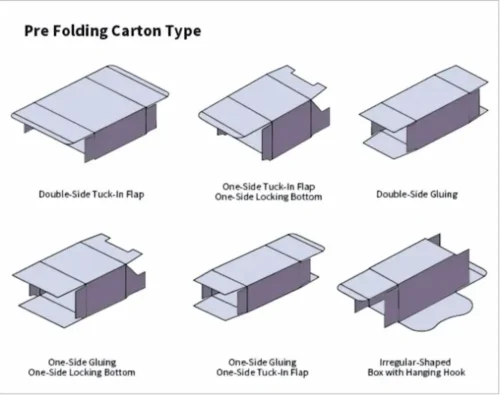
Carton specifications: Evaluate carton size, material, opening structure, and closing method to ensure compatibility with the machine.
Production capacity: Define the target output and consider feeding stability, changeover time, inspection requirements, and expected operating conditions.
Line integration: Determine whether the cartoning machine needs to connect with conveyors, counting equipment, case packers, a box taping machine, or a wrapping machine for boxes.
Maintenance and support: Consider operator accessibility, safety features, spare-parts availability, and technical support when comparing equipment options.
Testing representative products and cartons before finalizing a configuration can help confirm that the selected solution meets the intended requirements.
Conclusion
Choosing the right cartoning machine is an important step toward efficient and consistent packaging. For products that benefit from loading through an open top, a top-load cartoning machine can provide flexible product placement and a practical packaging process. A horizontal cartoning machine may be more suitable for products designed for side insertion.
For manufacturers preparing products for export, integrating cartoning with case packing, a box taping machine, and a wrapping machine for boxes can extend automation beyond individual cartons and support a more coordinated packaging line.
Looking for a cartoning machine for your products? Contact GrandPack to discuss your product specifications, packaging goals, and production requirements. Our team can help evaluate suitable equipment configurations for your packaging process.
Develop Your Business with Grand