
Liquid capsules replace injections? | Oral liquid capsules | Grand
Automatic Tablet Tube Filling Machine Customer Case Study
How to Choose an Automatic Capsule Filling Machine?
Introduction
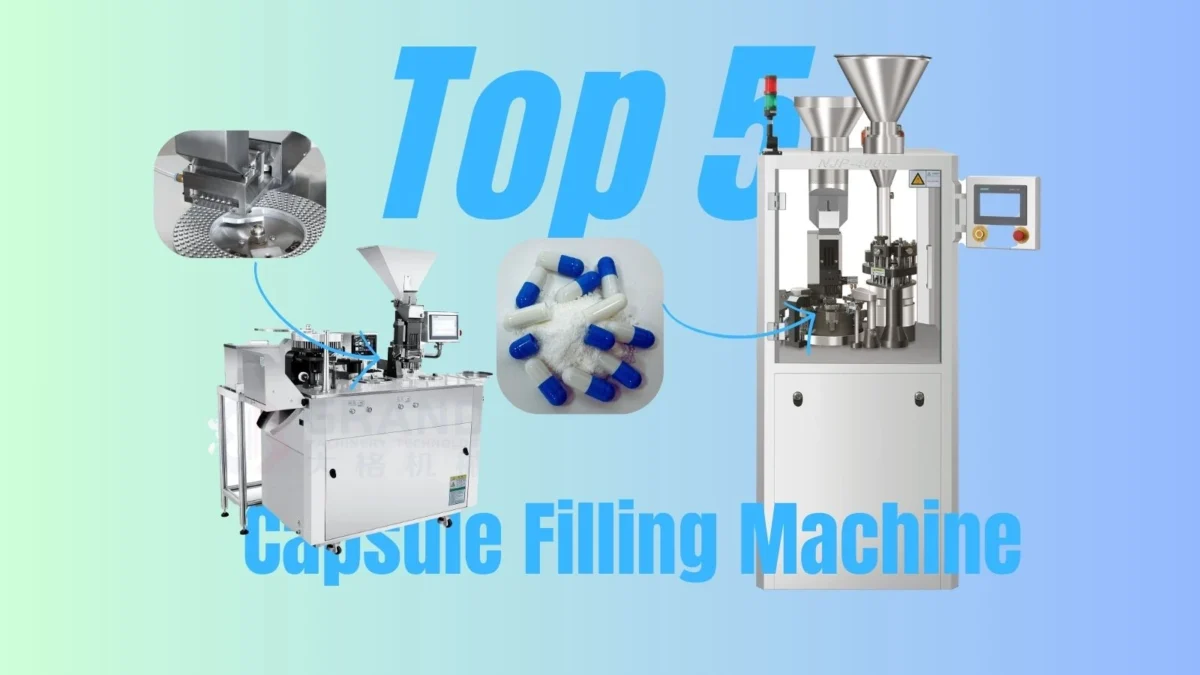
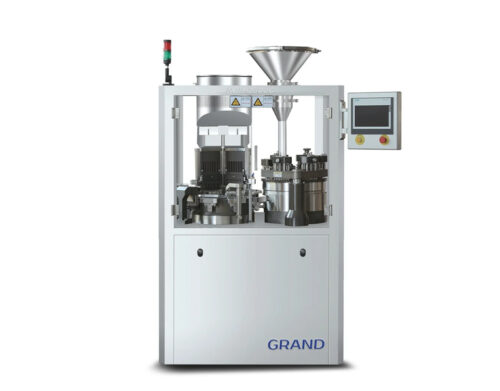
Pharmaceutical manufacturers looking to increase their capsule production capacity will inevitably opt for fully automated filling equipment, specifically, fully automatic capsule fillers. While there are numerous options available on the market, encompassing a wide range of brands and specifications, choosing a capsule filler can be tricky for pharmaceutical manufacturers or supplement producers.
Purchasing complex pharmaceutical machinery, such as a capsule filler, requires more than just a spec sheet. We recently received a detailed inquiry from a French pharmaceutical laboratory. Their questions were highly specialized and should be considered by all serious buyers. This article will share these real-world technical questions and the expert answers from our GRAND engineers, providing a comprehensive buyer's guide.
Core Question 1: A Soul-Stricking Question About Production Speed
Customer Question: "For size 00 and size 000 capsules, what are your 'theoretical speed' and 'actual speed'? I don't believe the size 00 can reach 150,000/hour."
Grand Machinery Expert:
First, be wary of suppliers who quote the same maximum speed for all capsule models. This is highly unprofessional and should be eliminated immediately!
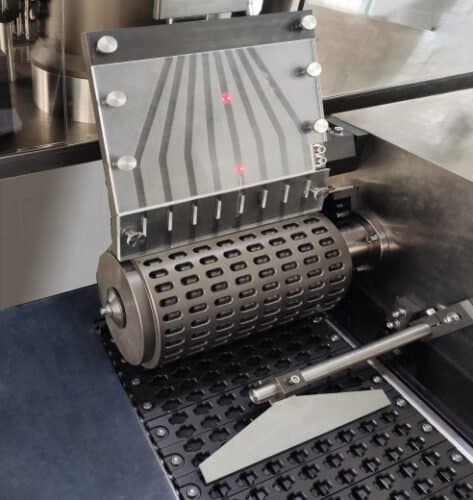
The customer's question above is valid. They were very careful and paid attention to the machine's 'theoretical speed' and 'actual speed'. For the Grand capsule filling machine NJP2500C, the "150,000/hour" is usually based on the smallest capsules (such as size 2 or 3).
Why are the speeds for size 00 and size 000 capsules slower?

This is often due to technical limitations. Due to their large size, the number of die holes that can be installed on the machine's turret is limited (for example, from 25 holes to 16 holes).
As our Sales Manager, Luna, responded, "For both 00# and 000#, we've confirmed a stable production rate of 120,000-130,000 capsules per hour." This is achievable production capacity.
Core Question 2: Cleaning and GMP Compliance
Customer Question: "Does the machine have a segmented capsule cleaning station (compressed air + vacuum)?"
Grand Machinery Expert:
The buyer is very professional. This directly relates to GMP (Good Manufacturing Practices) and preventing cross-contamination. The answer is obvious: our company's NJP 2500C comes standard with this feature. How it works: After the capsule is ejected, the system uses high-pressure compressed air to purge the die hole and immediately removes any remaining powder via a vacuum system.
Our standard configuration includes a compressed air and vacuum cleaning system.
After each capsule is ejected, the system automatically blows compressed air through the segment holes to remove powder residue.
At the same time, a vacuum suction nozzle collects the remaining dust instantly.
This combination keeps the working station clean and ensures the machine meets GMP (Good Manufacturing Practice) requirements.
It also improves the consistency of capsule weight and reduces downtime for manual cleaning.

"Of course, since this model has a high production speed, we recommend using it in conjunction with a capsule polishing machine as an auxiliary device to obtain perfect capsules." Luna added
4. Question 3: Factory Acceptance Test (FAT)
Customer question:
“Can we send our own capsules and powders (several kilograms) for testing at your factory?”
Our answer: Not only possible — it’s highly recommended.
Every powder is different.
Even two formulations that look similar may behave completely differently when filled.
Flowability, bulk density, moisture content — all these affect the dosing accuracy and the choice of dosing disc thickness.
That’s why we always encourage customers to send their actual materials for Factory Acceptance Testing (FAT).
During FAT, our engineers will:
Test your product on the NJP 2500C.
Record capsule weights, rejection rates, and filling accuracy.
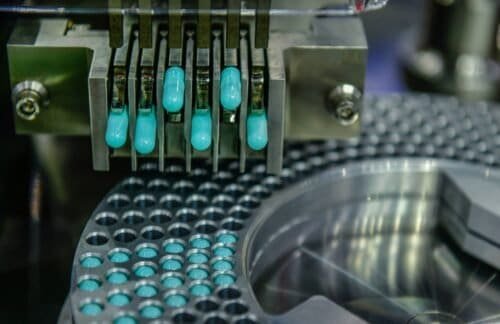
Provide video evidence and detailed test reports.
This process helps confirm that your product runs smoothly before shipment, saving you time and risk later.
5. Question 4: Spare Parts and Maintenance
Customer question:
“Can we order extra spare parts like sealing rings or pins? What’s the price for the indexing drives?”
Excellent question — this shows a customer who’s thinking long-term.
When you buy a capsule filler, you’re not just buying a machine; you’re buying a system that must stay reliable for years.
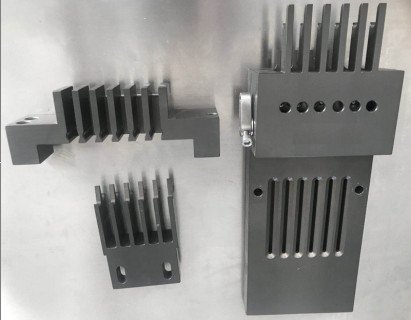
What a good supplier should provide
A professional supplier should always include a complete spare parts list.
For the NJP 2500C, the typical spare parts include:
O-rings and sealing rings
Springs and pins
Upper and lower segment assemblies
Powder tamping pins
Vacuum lines
Indexing drives for the dosing disk and main turret
Transparency builds trust
For our clients, we provide a full spare parts quotation sheet.
This helps you plan your Total Cost of Ownership (TCO) over 2–3 years and ensures no hidden costs later.
Remember: maintenance transparency is a key sign of a trustworthy supplier.
6. Question 5: Documentation, Language, and Factory Audit
Customer question:
“Is your control system and documentation in English? And can we visit your factory?”
System language
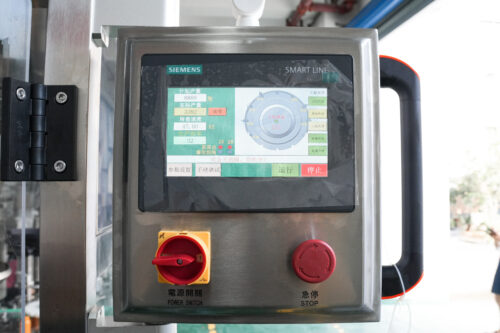
Yes — the NJP 2500C uses a PLC + HMI touchscreen system that fully supports English (and other languages on request).
All menus, alarms, and parameter settings appear in clear English.
Technical documentation
We provide a complete English documentation package, including:
User manual
Electrical drawings
SOP (Standard Operating Procedures)
IQ/OQ (Installation and Operation Qualification) protocols
This ensures your QA and validation team can easily review everything according to GMP standards.
Factory visit
We always welcome clients to visit our factory in WenZhou, China.
You can audit our workshop, test the machines, and talk directly with our engineers.
We believe openness builds confidence — and every buyer deserves that.
7. Question 6: Machine Calibration and Accuracy
Customer question:
“How accurate is your capsule filling weight? What’s the rejection rate?”
Accuracy depends mainly on powder characteristics, but the NJP 2500C achieves impressive results.
Filling accuracy: ±2% for free-flowing powders
Rejection rate: less than 1% under stable operation
Adjustment: Easy calibration via touchscreen, with servo control for dosing adjustment
These figures are not “lab-only” numbers — they are from real FAT results with pharmaceutical powders.
Consistency is what matters most, especially in clinical or commercial production.
8. Question 7: Changeover Between Capsule Sizes
Customer question:
“How difficult is it to switch from size 0# to 00# or 000# capsules?”
This is an important operational detail that many first-time buyers overlook.
Quick changeover design
On the NJP 2500C, changing capsule sizes mainly involves replacing:
- Upper and lower capsule segments
- Dosing disk
- Sorting parts (capsule feeding system)
The whole process takes about 40–60 minutes with trained operators.
All components are precision-machined, so alignment is straightforward.
We also offer extra change parts kits for customers who regularly switch capsule sizes.
Each kit includes all necessary parts for a new capsule size, properly labeled and packed for easy storage.
9. Question 8: Operator Training and Support
Customer question:
“Do you provide operator training and online support after purchase?”
Yes — and we consider it part of our responsibility.
Training options
On-site training at our factory during FAT
Remote video training sessions for your operators
Complete English video tutorials for setup, operation, and maintenance
After-sales support
Our technical team provides 24-hour online assistance via email or video call.
We can also dispatch engineers for on-site installation and commissioning when required.
10. Question 9: Why Choose a Verified Factory Over a Trader
One of the biggest risks in this industry is buying from trading companies who don’t manufacture their machines.
They often rebrand, overpromise, and disappear when technical issues arise.
Here’s how to tell a real factory from a reseller:
The supplier provides factory photos and lets you visit anytime.
The machine has original serial numbers and a quality control logbook.
Engineers can answer detailed technical questions about mechanical design and software logic.
Always choose a verified pharmaceutical machinery manufacturer — one that’s confident to open their doors and show how your machine is made.
Conclusion: What You Should Expect from Your Supplier
Buying an NJP 2500C capsule filler is not just about choosing a machine with the right speed or price.
It’s about finding a technical partner who can support your production from setup to validation — and be transparent every step of the way.
A trusted supplier should:
✅ Be honest about theoretical vs. real production speeds.
✅ Include proper cleaning systems for GMP compliance.
✅ Encourage you to test your own materials before shipment.
✅ Provide spare parts lists and transparent pricing.
✅ Offer English documentation and allow factory audits.
✅ Support you with training and after-sales assistance.
When a supplier answers all these questions confidently, you can trust that your investment is in good hands.
Call to Action
Do you have your own technical questions about capsule filling machines?
Tell us about your capsule sizes, powder properties, and production goals — and our engineers will prepare a detailed technical solution for you, just like we did for Laboratoire in France.
👉 Contact us(sales@grandpackmachine.com) today to start your evaluation of the NJP 2500C automatic capsule filling machine.
References
11 Mistakes You Make When Using a Capsule Filling Machine – Precision Filling
How to Use the Machine to Make Capsules? A Step-by-Step Startup Guide
Develop Your Business with Grand